The Danube Delta – Photo Expedition 2024
On 1 June 2024 we set off from Bratislava to discover the beauty of Romania’s Danube Delta: pelicans, wildcats, the horses of Letea, Sulina, Caraorman and a return via Constanța and Brașov.
On the first of June 2024 we set off from Bratislava to discover the beauty of the Danube Delta in Romania. Our route promised varied scenery and first took us along the motorway into Hungary. Not far from the Slovak border, however, we were caught by a sudden, violent storm. Thunder, lightning and torrential rain caused problems on the motorway. Fortunately, as we headed further south, the storm eased and clear skies were with us again.
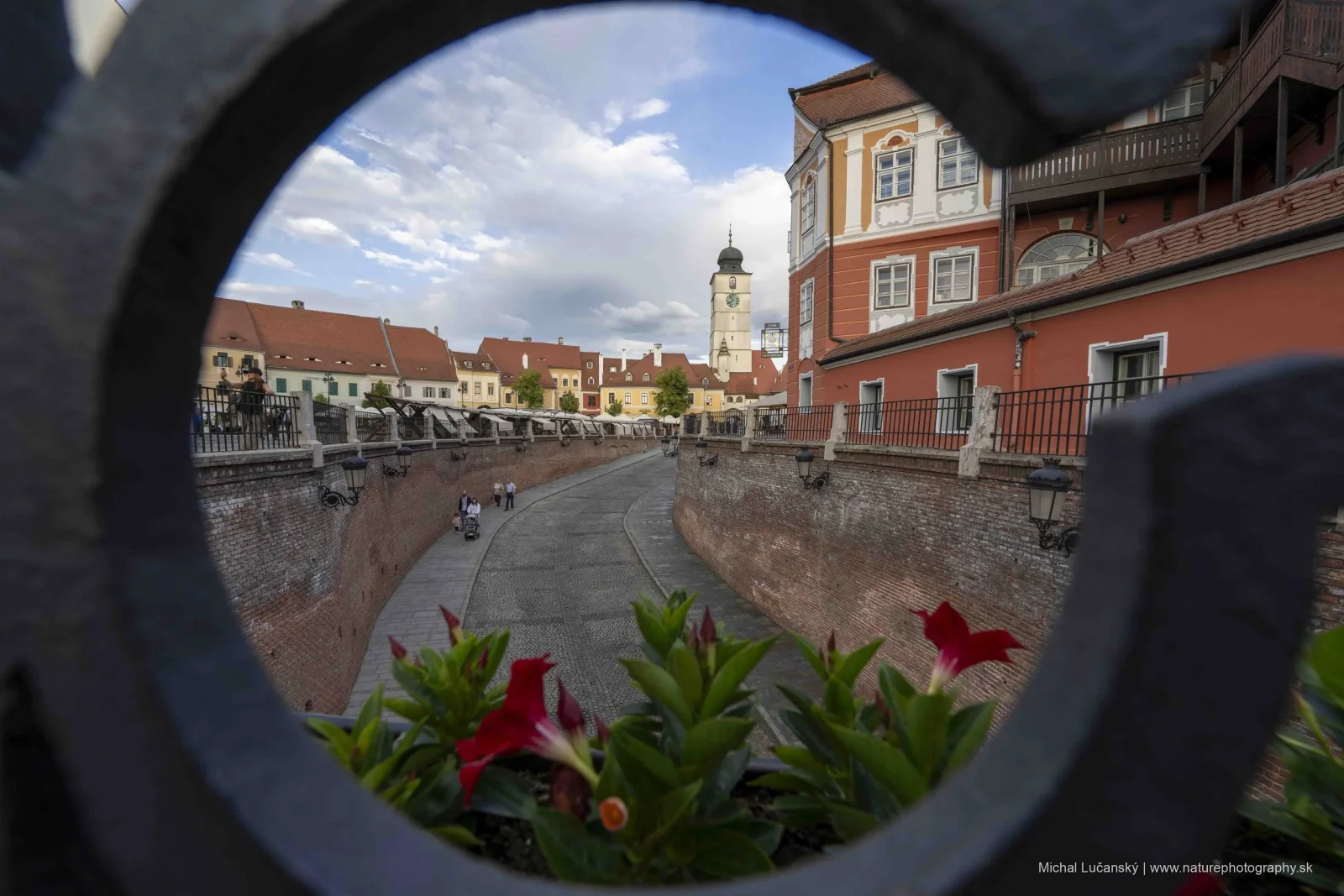
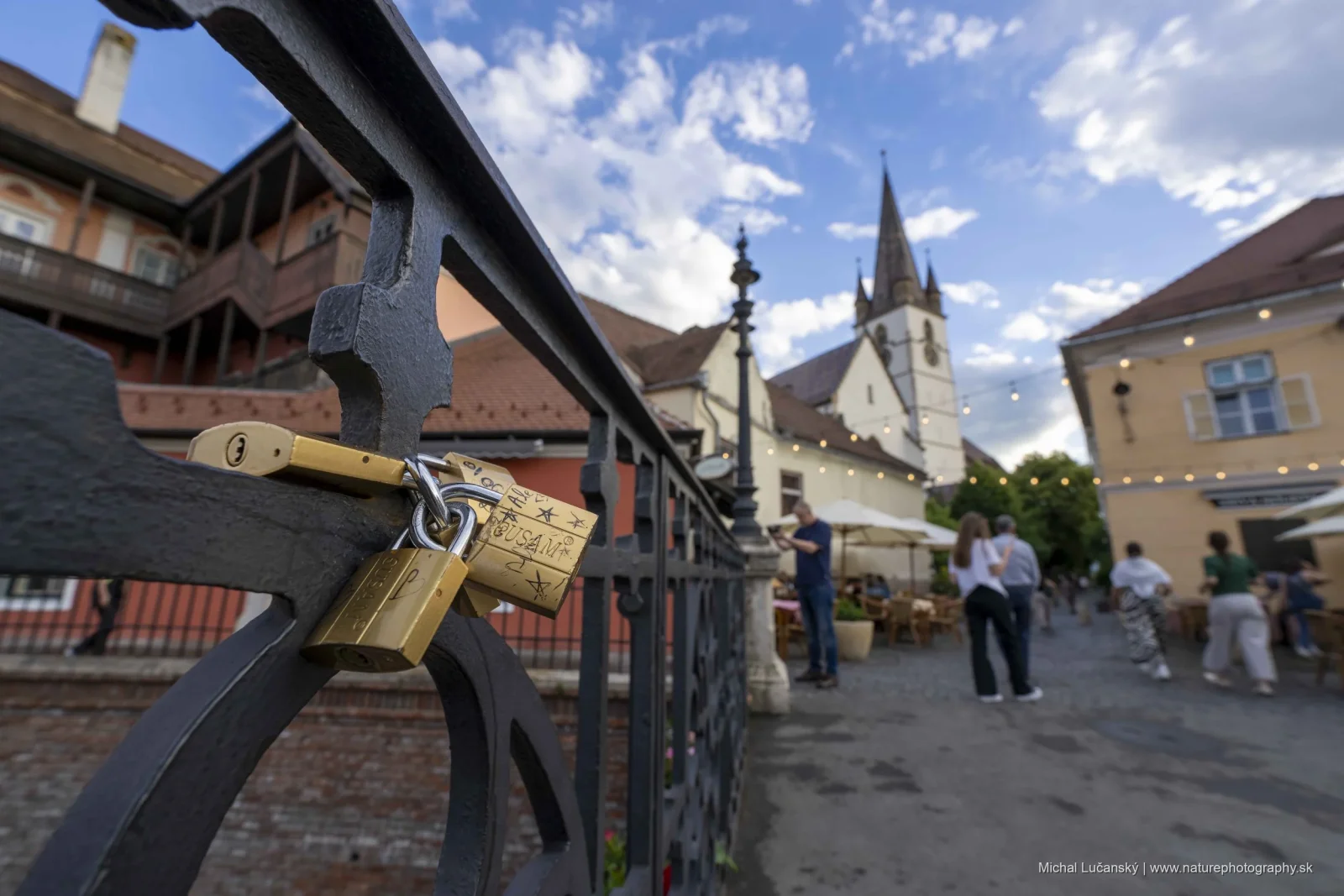
Our first stop was the historic city of Sibiu, where we spent the night. The charm and atmosphere of the city drew us in at once. With its narrow lanes, warm light and picturesque façades, it invited us to explore. That evening my travelling companions and I spontaneously organised an evening photo walk around the city, and Sibiu proved to be the perfect canvas. Together we captured the genius loci of this wonderful city – its lively streets, its unique lighting and the harmonious blend of past and present.
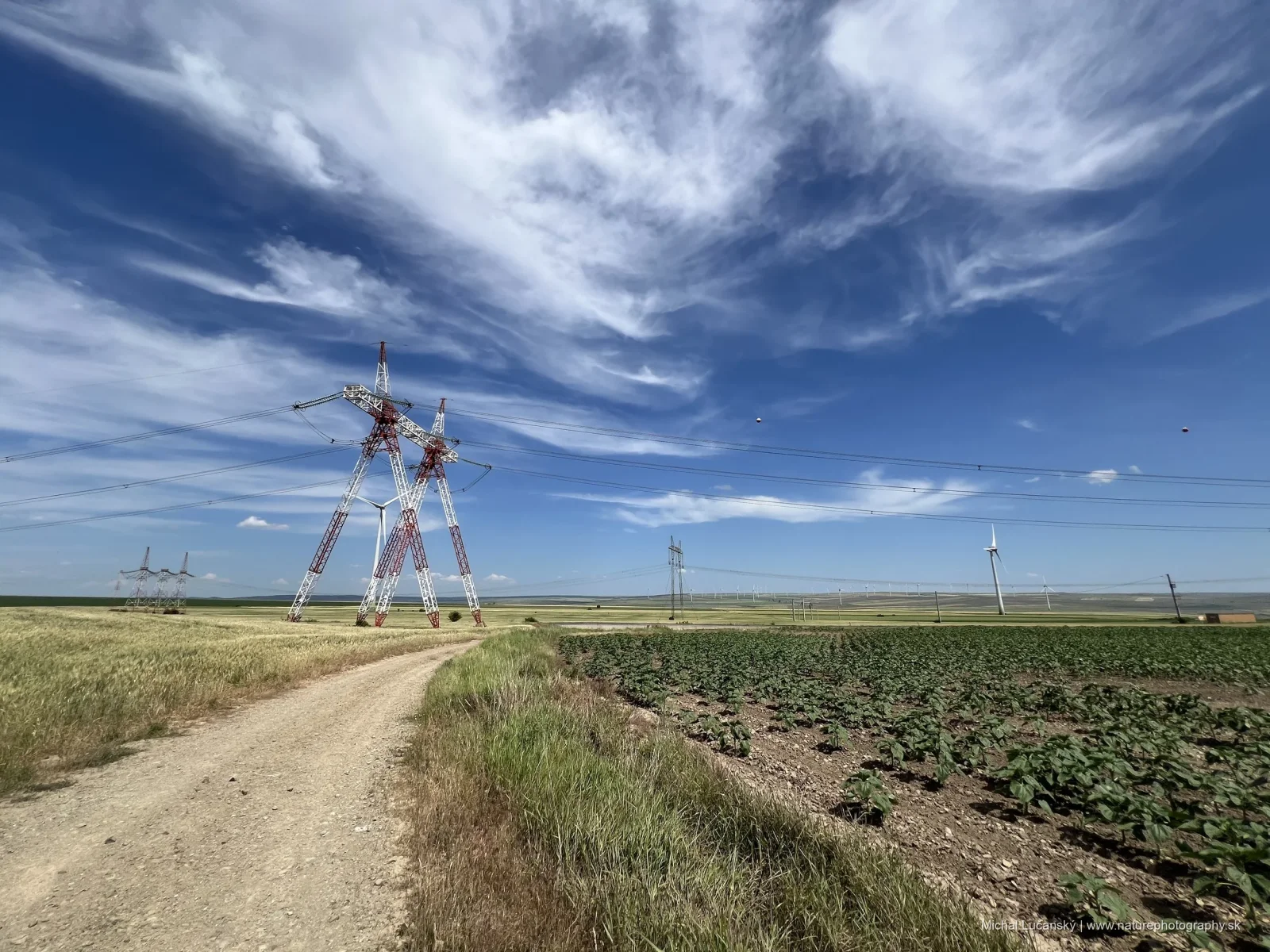
After this unforgettable experience we set off again early in the morning, this time deeper into Romania towards Crișan. The kilometres flew by, and with every moment our anticipation of what awaited us in the Delta grew. The drive to Crișan was pleasant, with the sky stretched wide over the landscape – a perfect prelude to the peaceful, nature-filled days ahead.
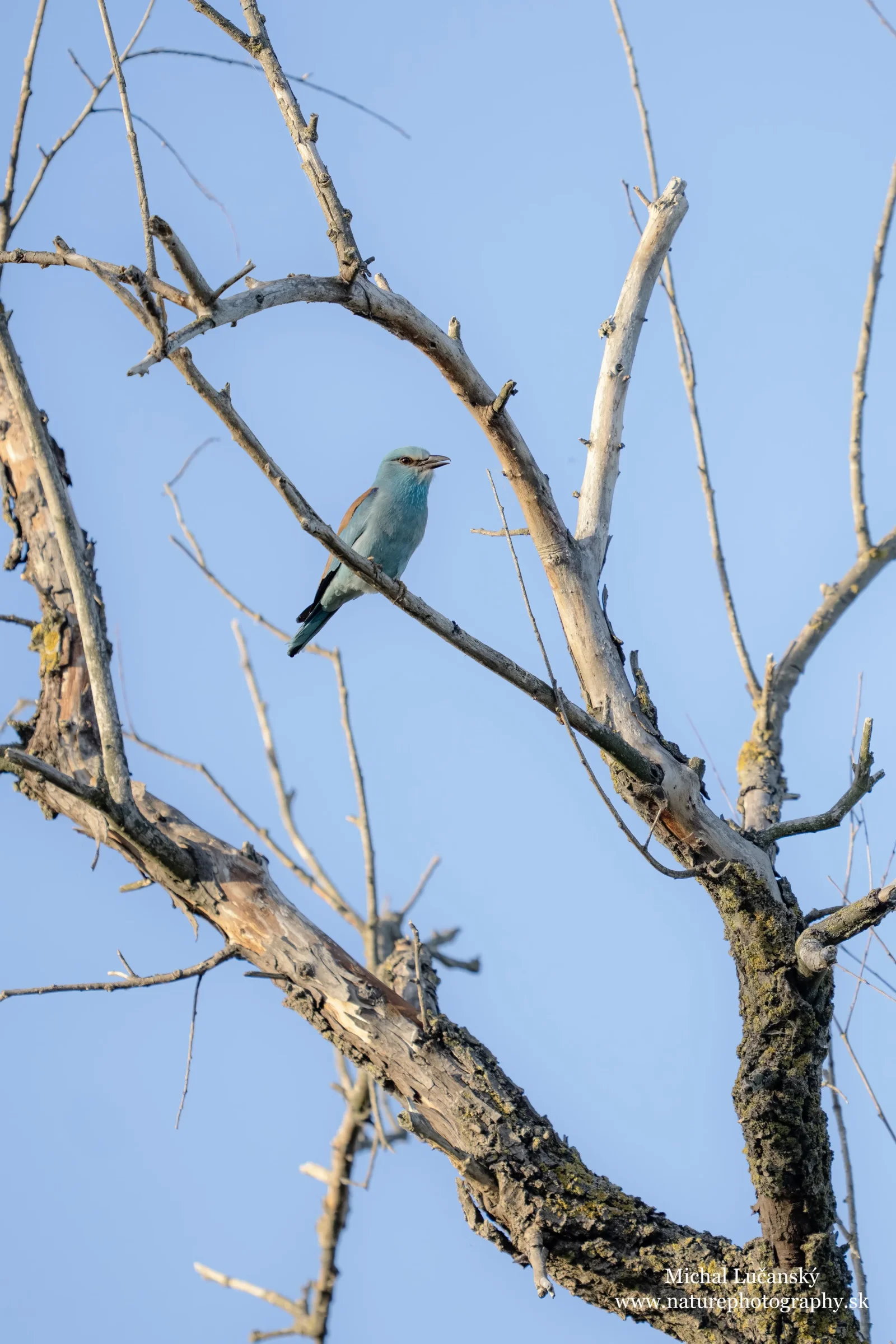
As we approached the port of Murighiol on the edge of Crișan, we saw the first signs of the amazing wildlife that defines the Danube Delta. Above the vast open fields stretching towards the water we glimpsed the elegant white silhouettes of pelicans gliding across the sky. During a refreshment stop we spotted a European roller perched on a low-hanging branch. It was a thrilling introduction to the adventure awaiting us on the water.
The surrounding landscape seemed endless. The terrain was wild and untouched, with vast fields fringed with reed beds and gentle channels winding towards the delta.
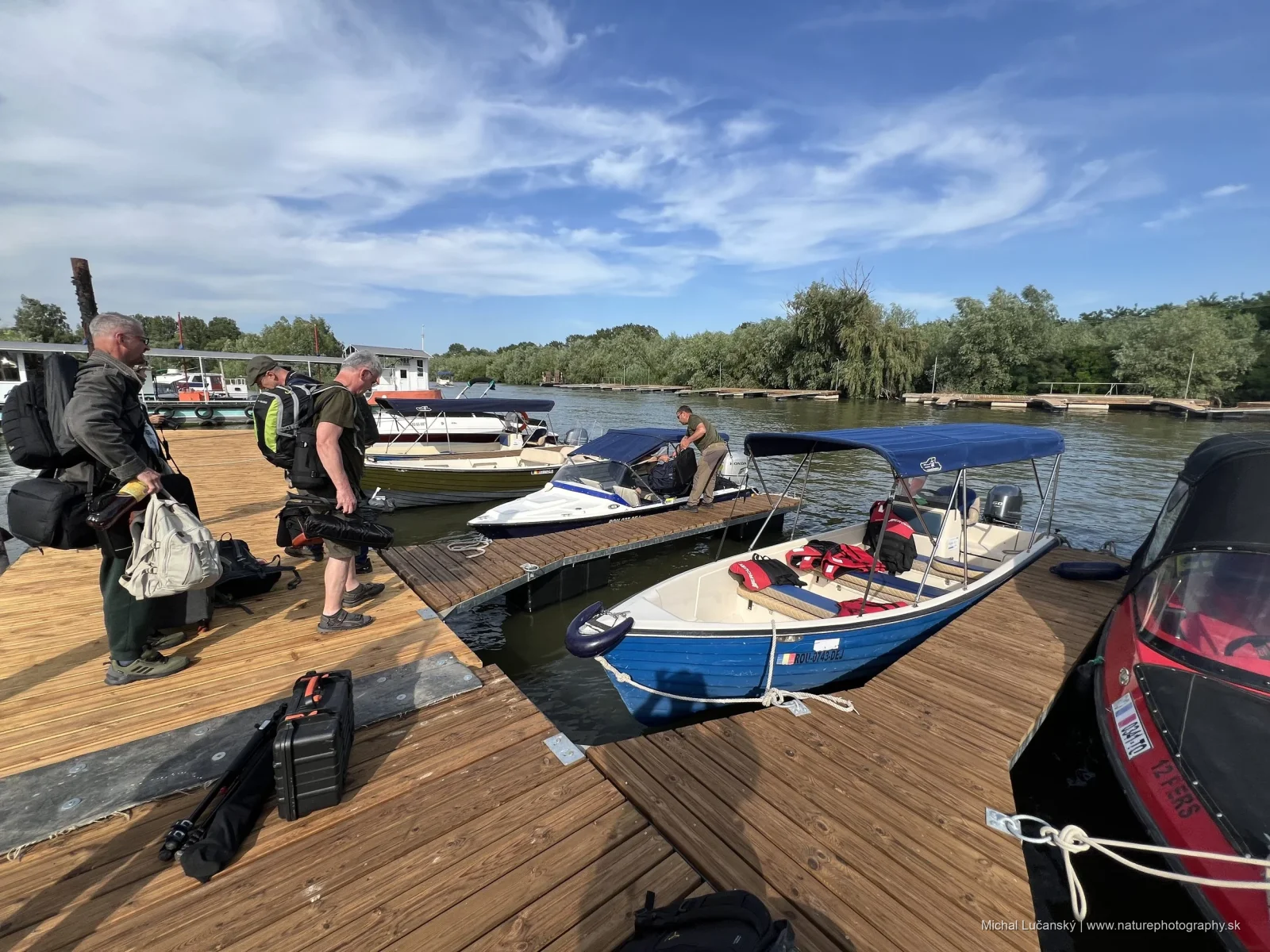
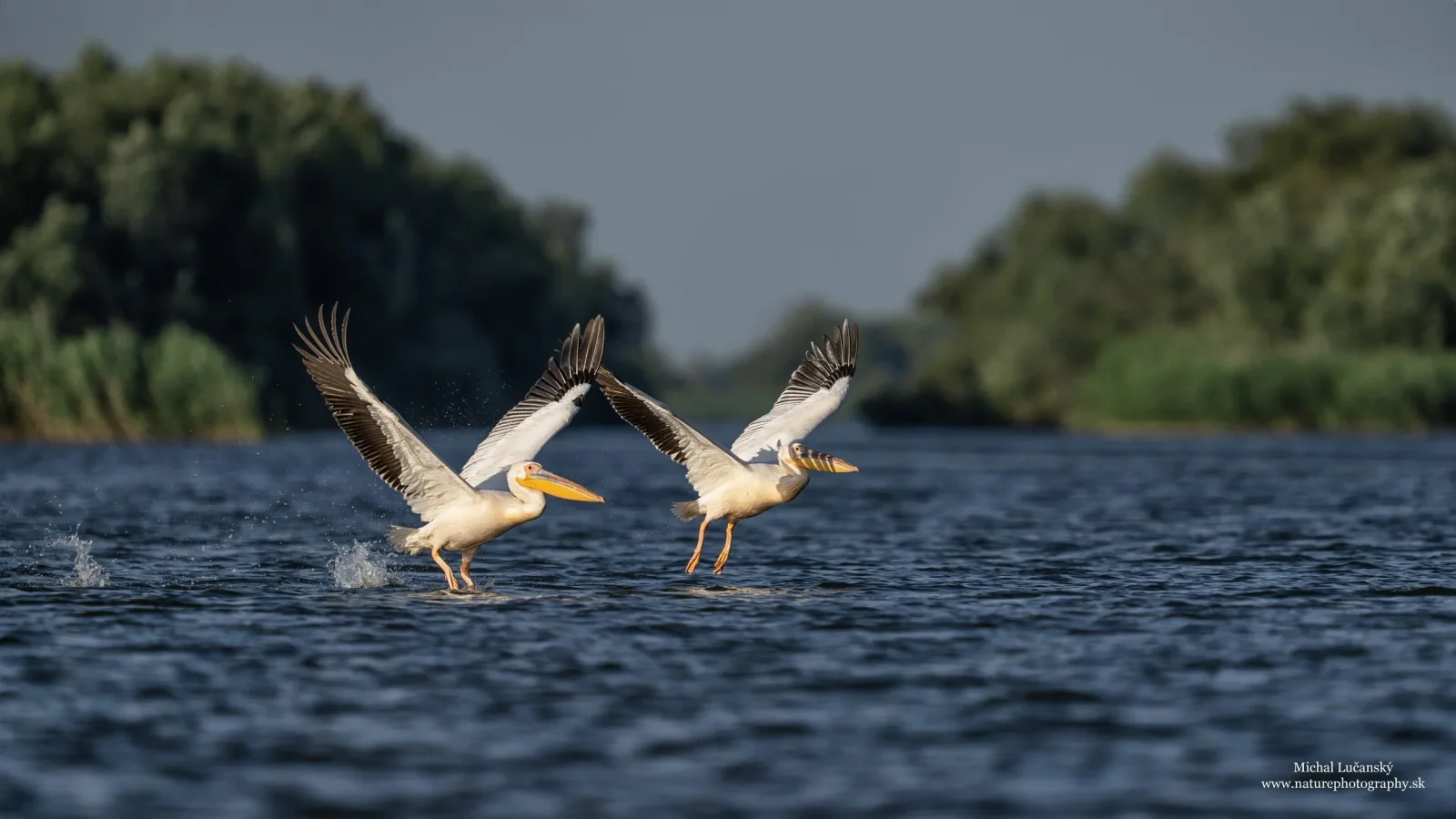
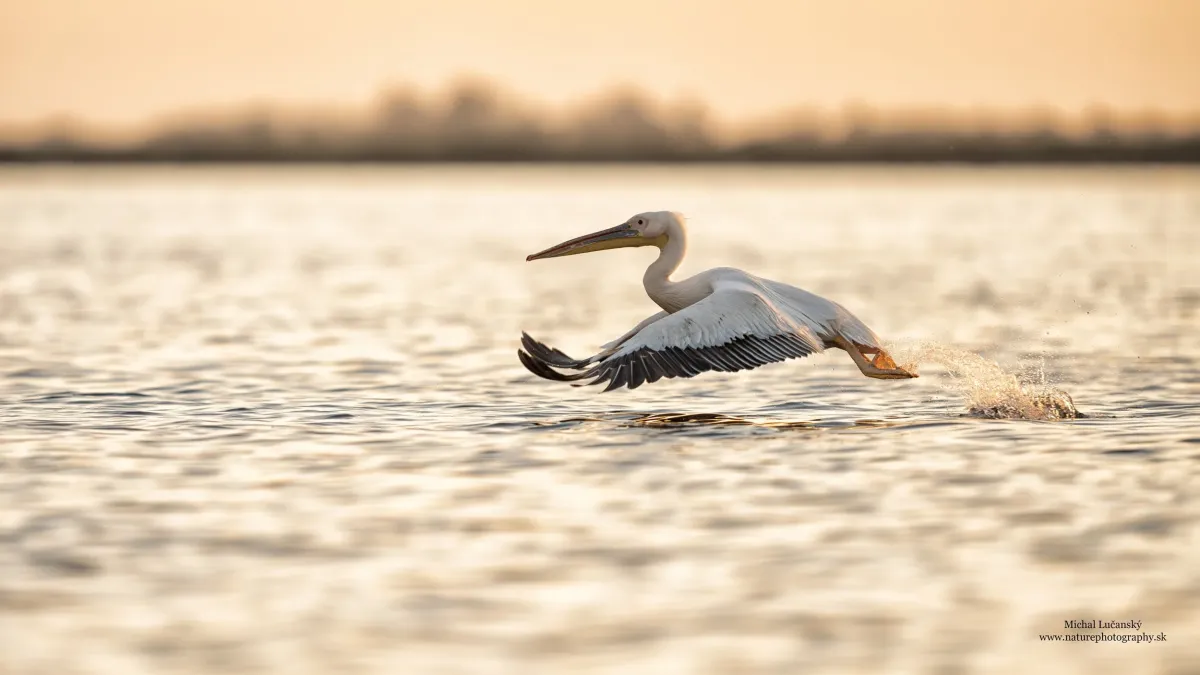
Our journey continued as we boarded small boats in Murighiol and set off through the intricate network of waterways of the Danube Delta towards Crișan. The adventure began almost immediately, when a group of pelicans flew over us and glided gracefully down to the surface of the water. Their calm presence opened the gates to this wild, remote world for us.
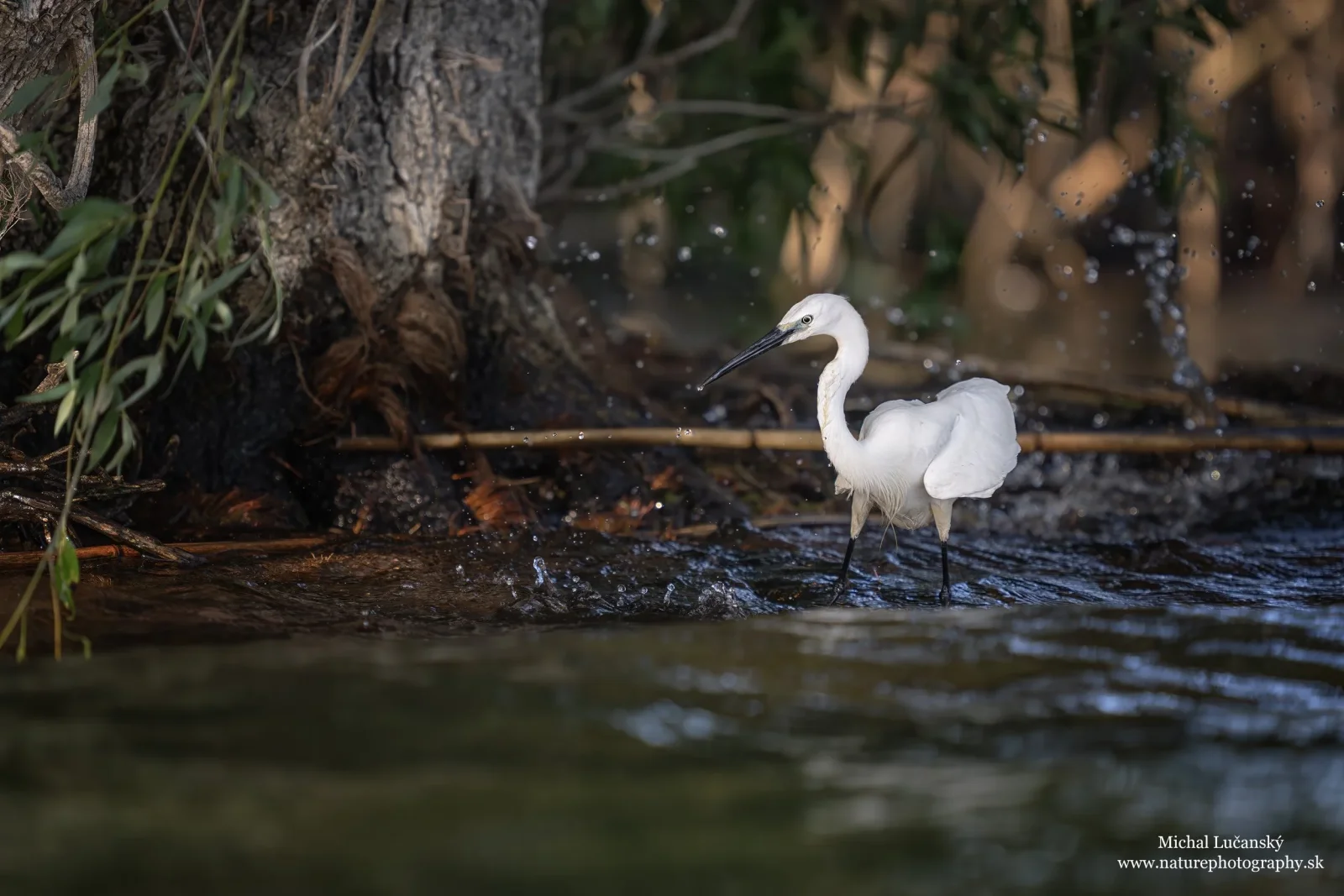
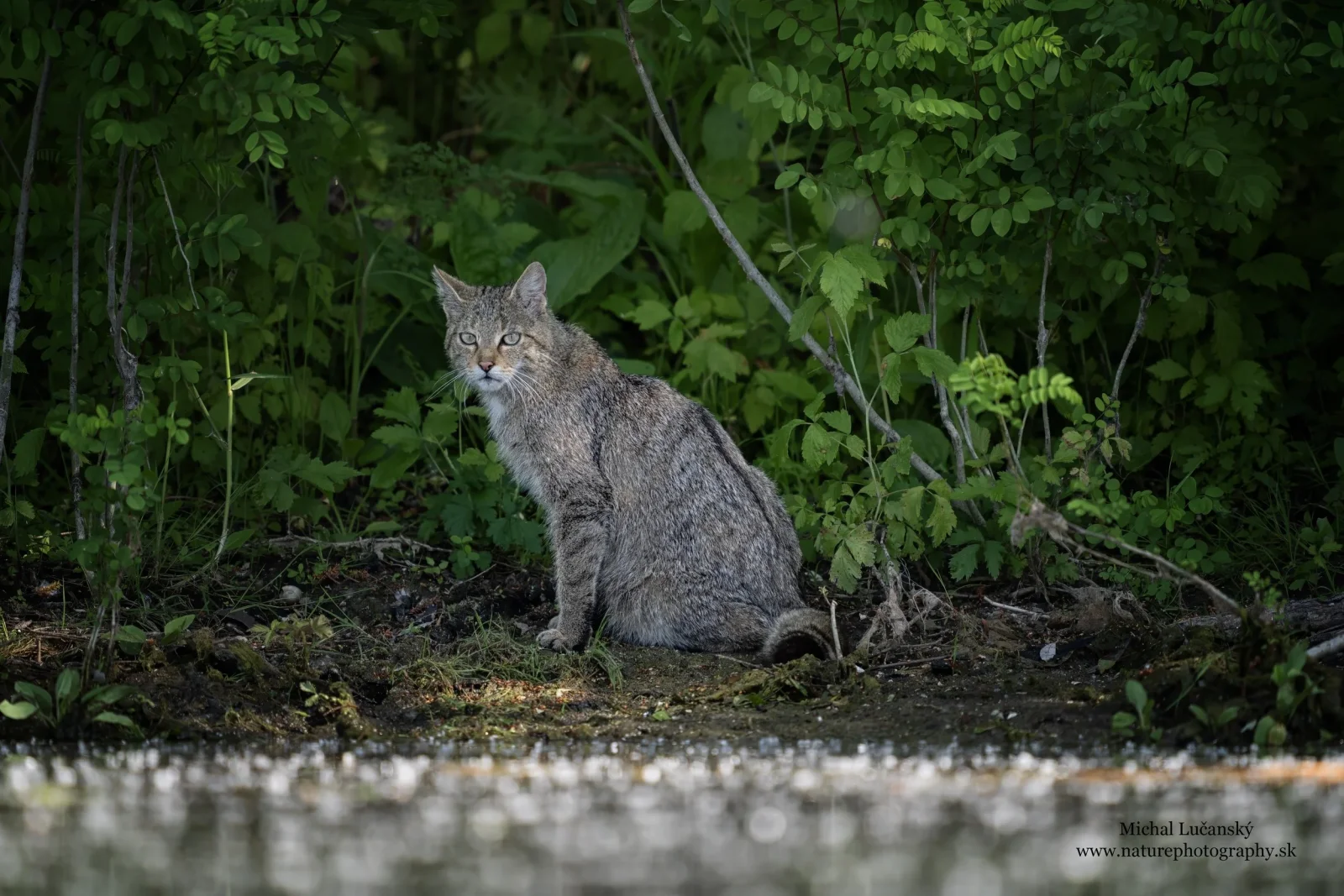
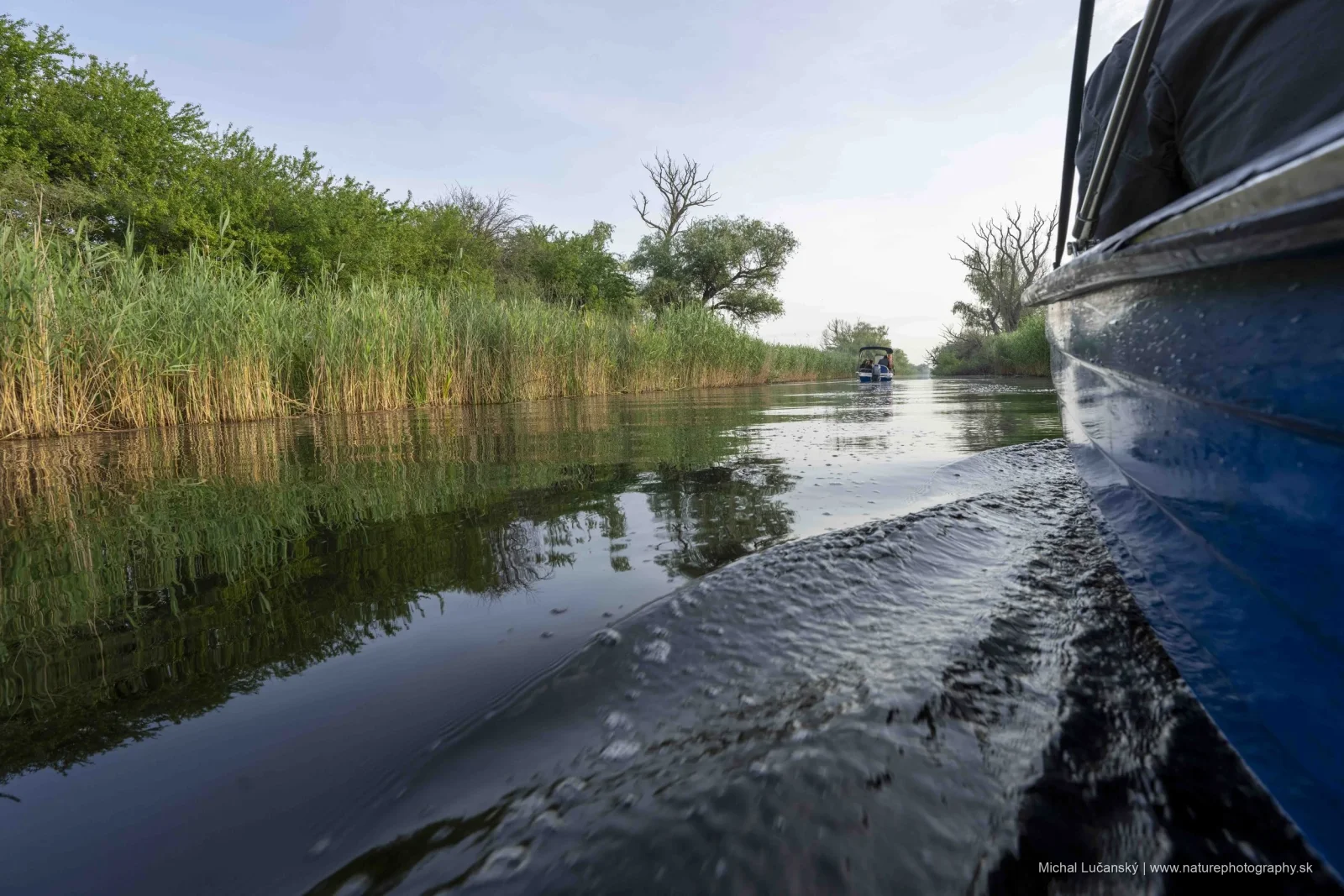
As we went deeper into the delta, the wide expanse of water narrowed into a small winding channel surrounded by dense reeds and willows leaning over the river. The atmosphere was quiet, broken only by the soft hum of the boat and the occasional bird call. It was here that we caught sight of something rare: a wildcat, which watched us sharply for a moment before vanishing into the thicket. Nearby, a brightly coloured European roller sat on a low branch, bringing a touch of blue and orange to the green scenery. White egrets stood in the shallows, their slender necks and elegant plumage in sharp contrast to the lush background. Every bend in the waterway revealed more of the Delta’s beauty, as if we were gradually discovering a hidden, untamed kingdom of nature.
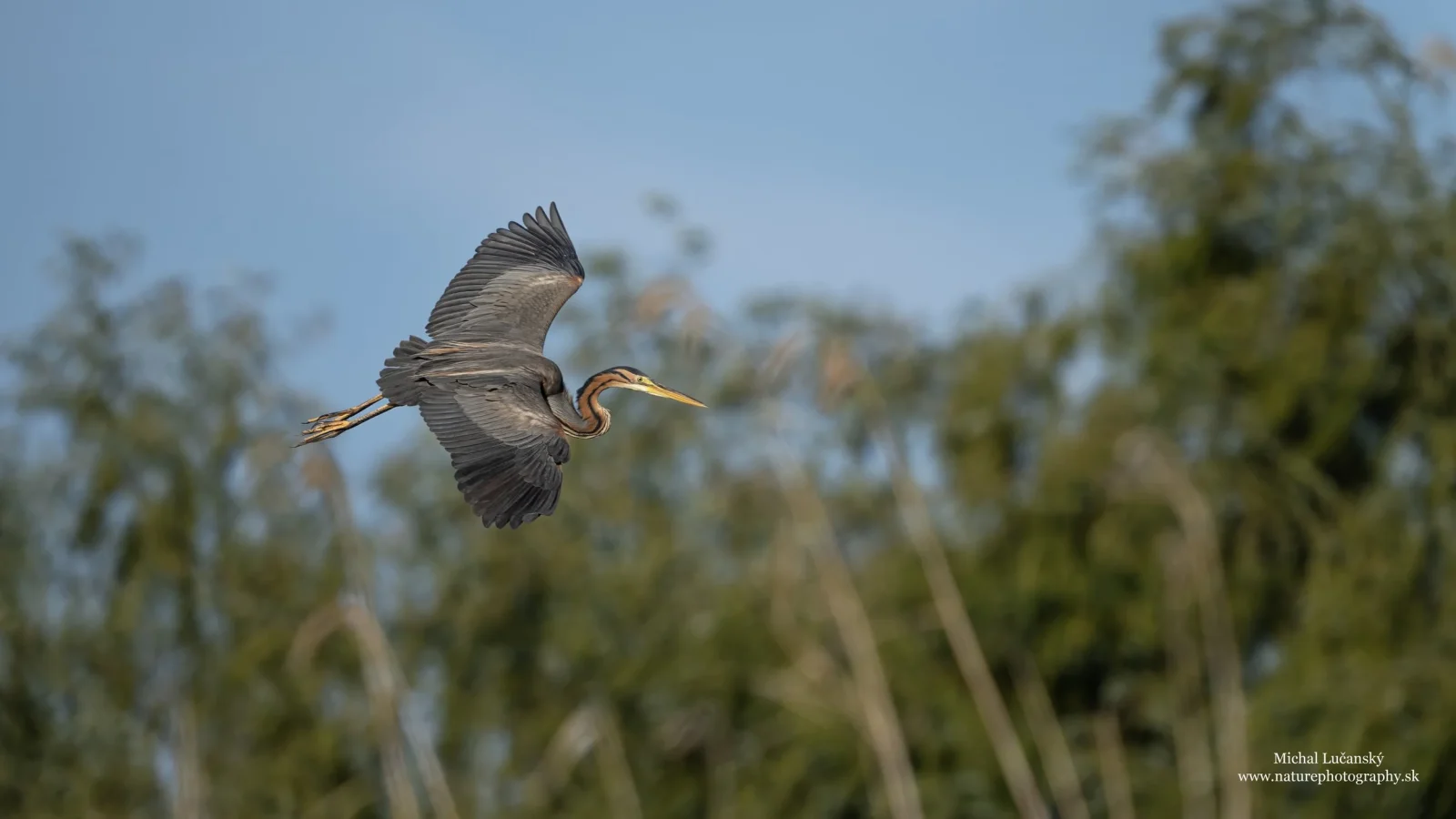
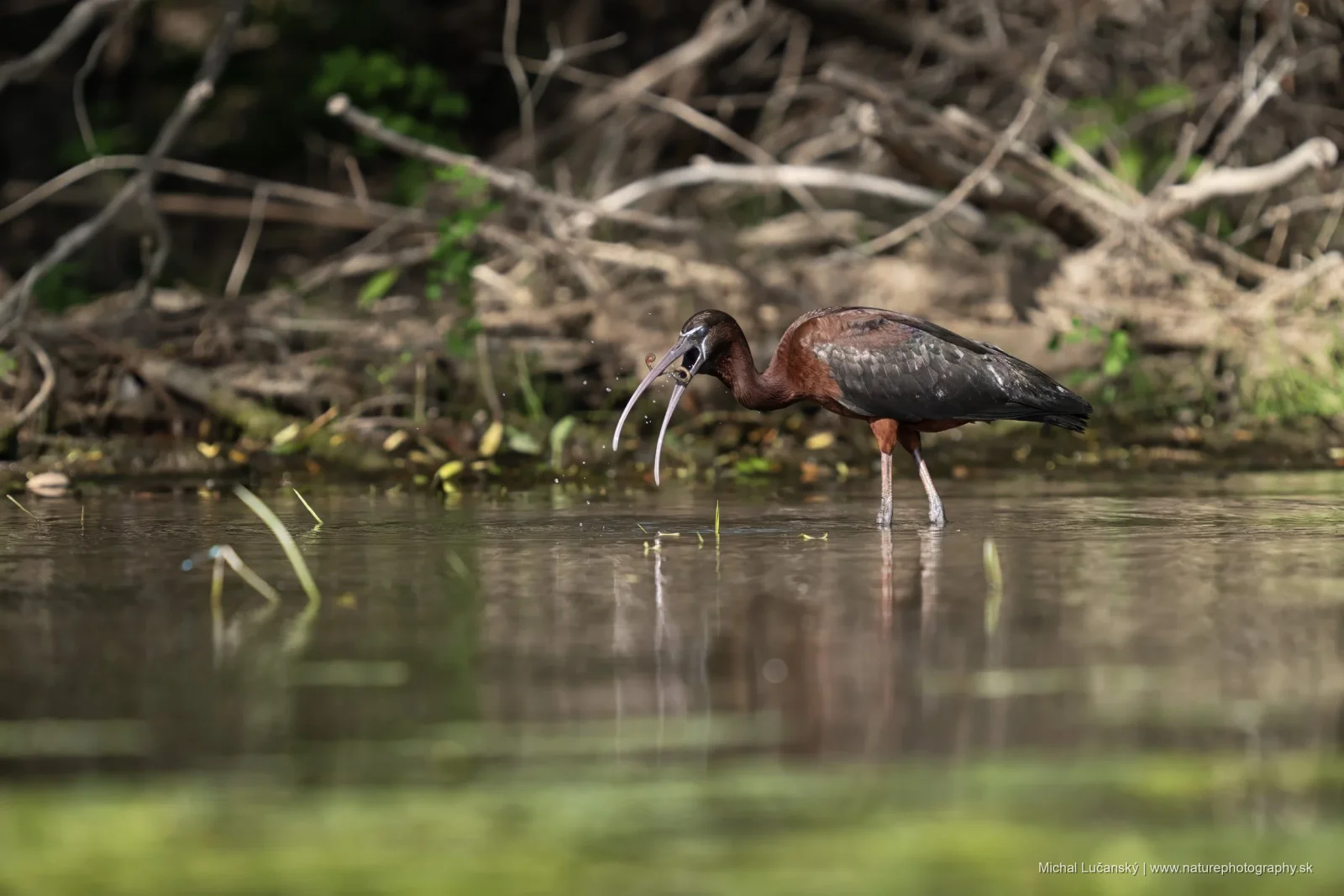
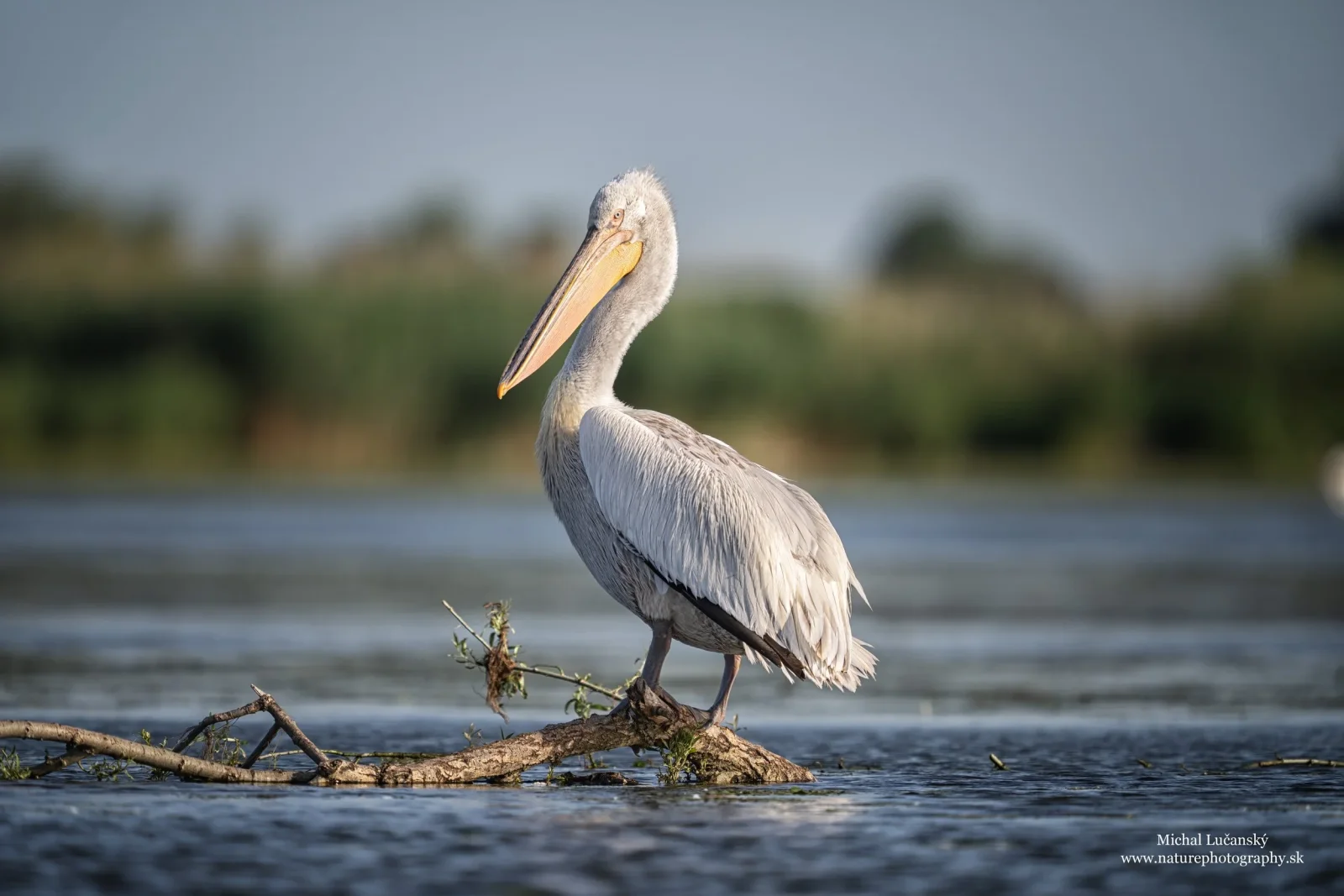
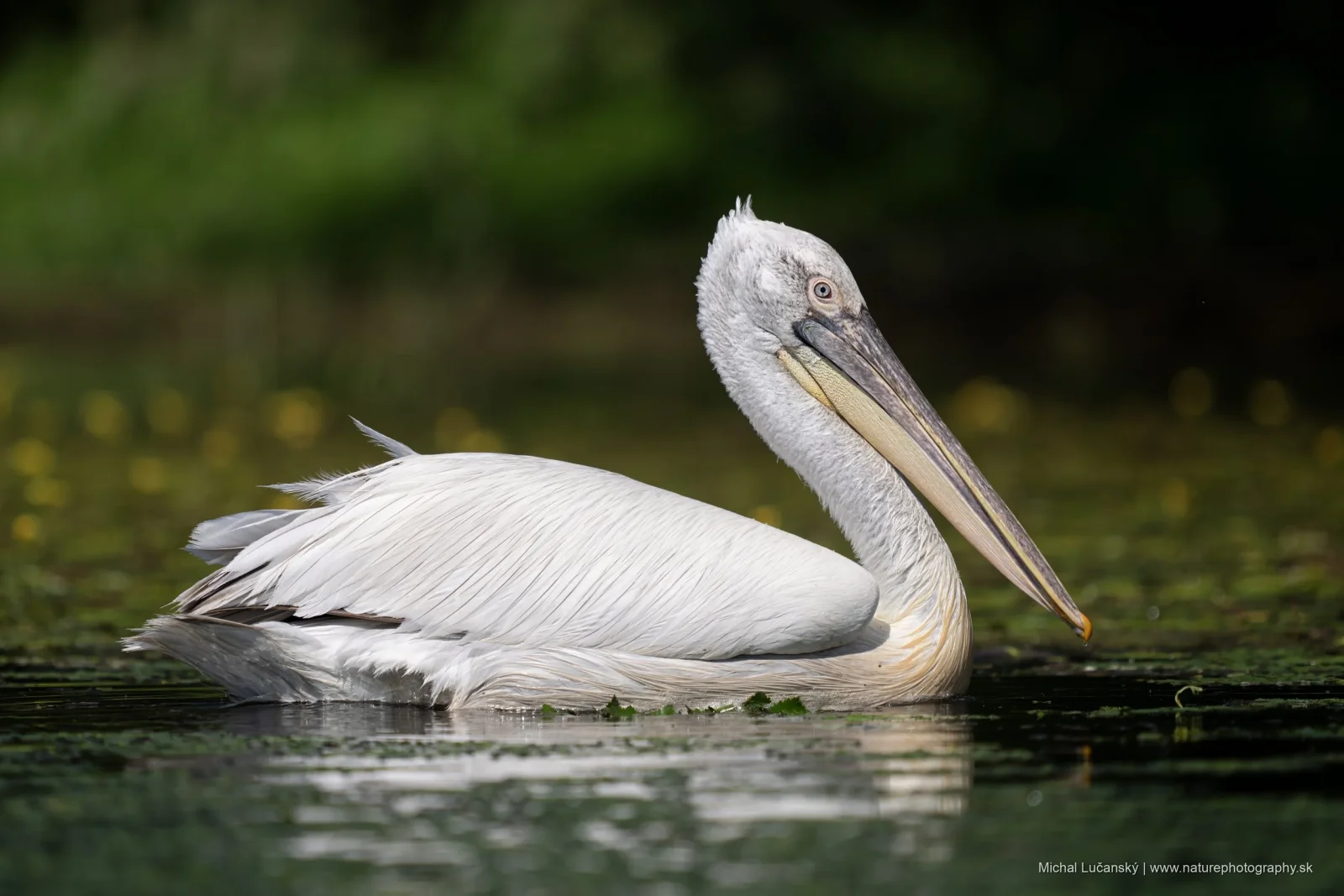
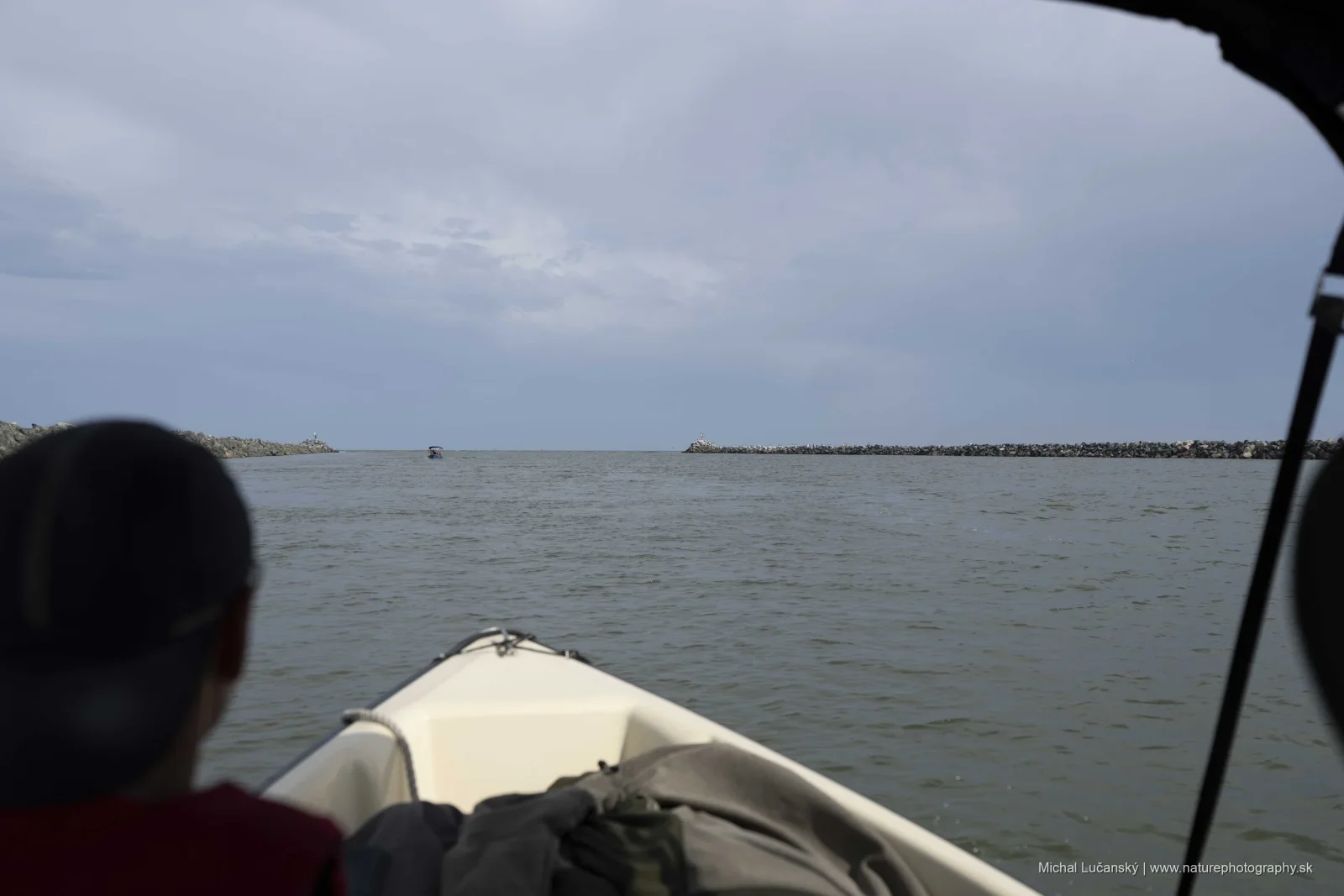
Having made our way through the narrow channel, we came out onto open water, where a breathtaking sight awaited us – a huge number of great white pelicans floating on the surface. With such grace, as if performing their own dance for us, they were joined by glossy ibises circling majestically over the water and by purple herons, whose rich colouring made a beautiful contrast with their surroundings.
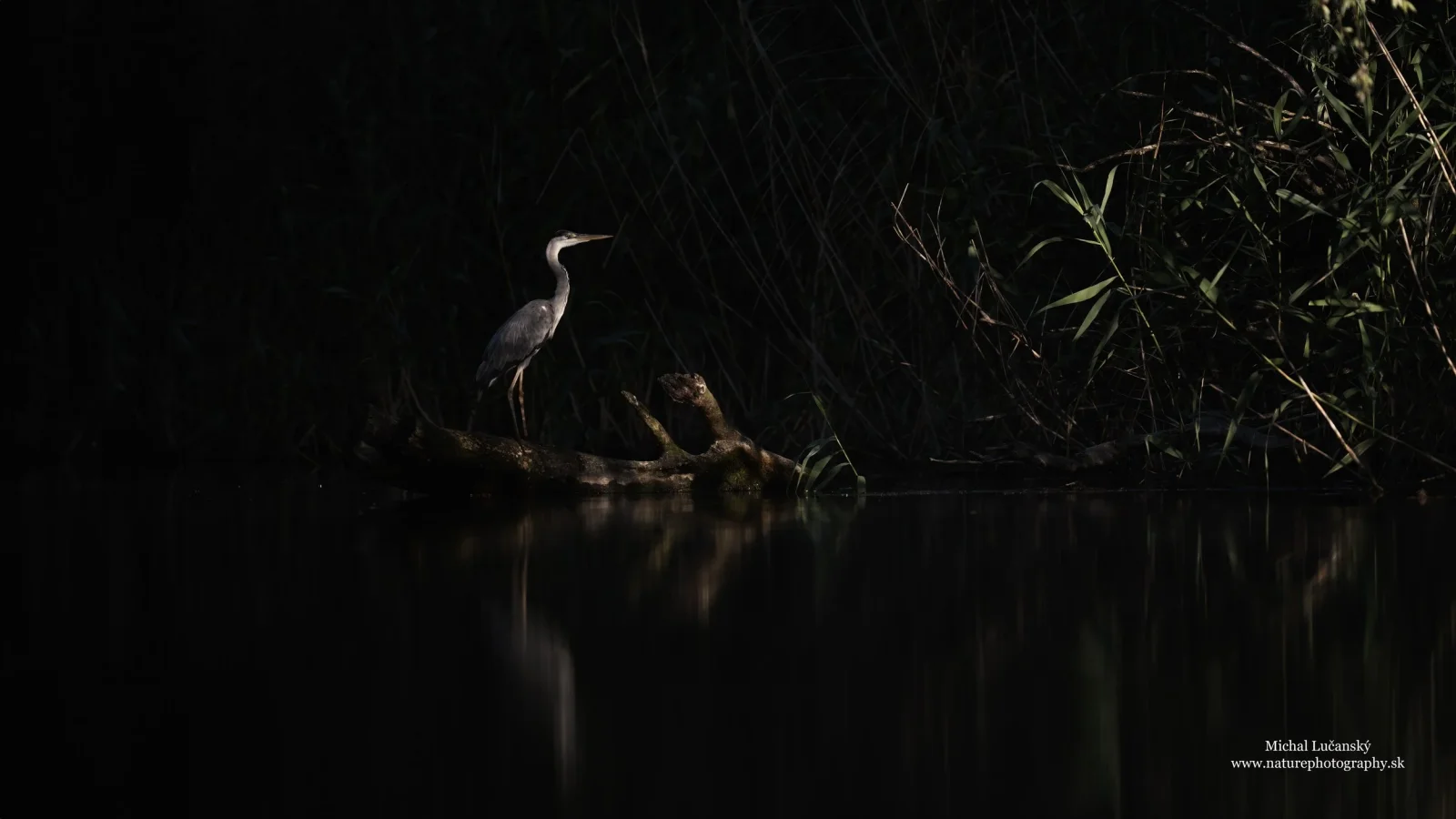
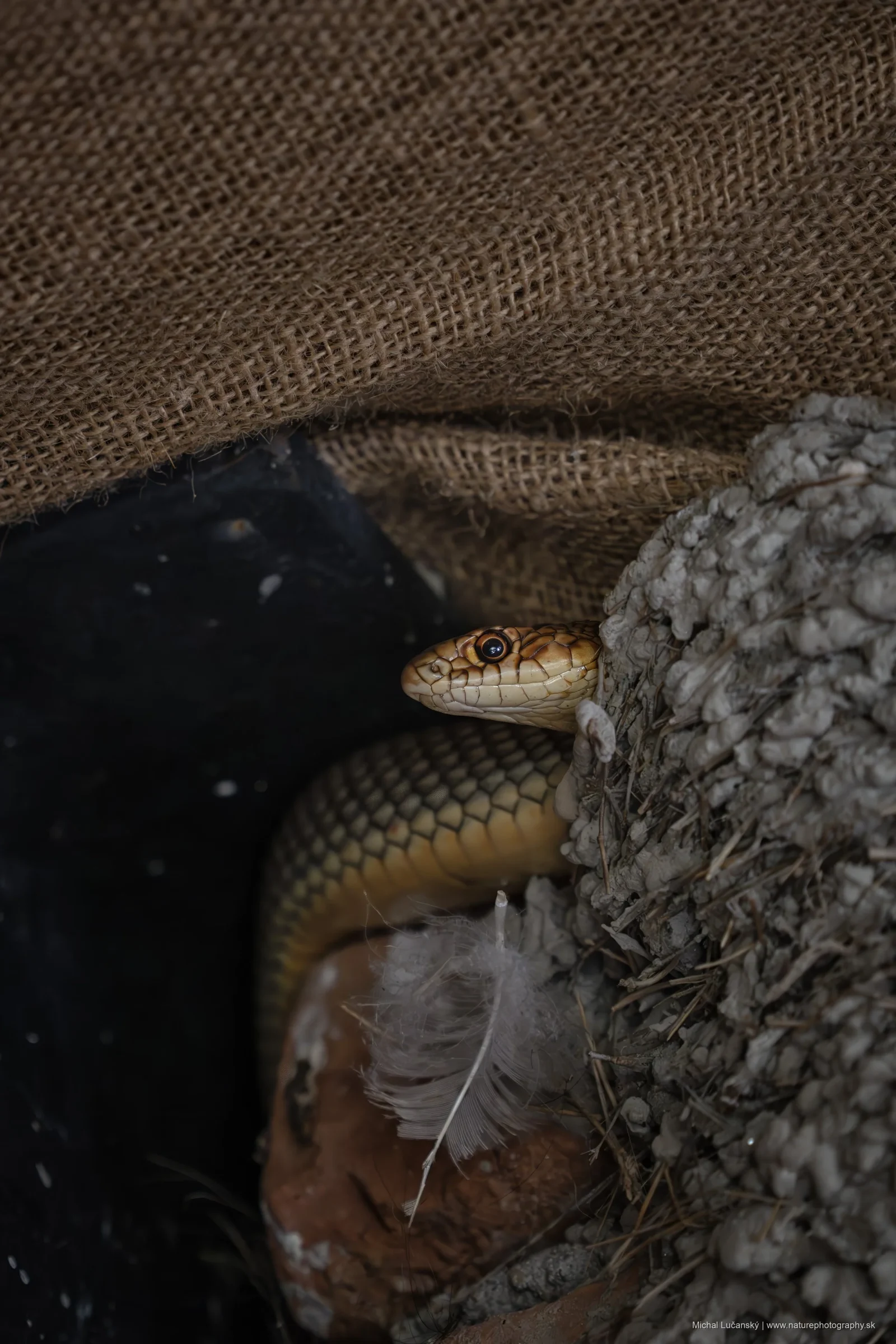
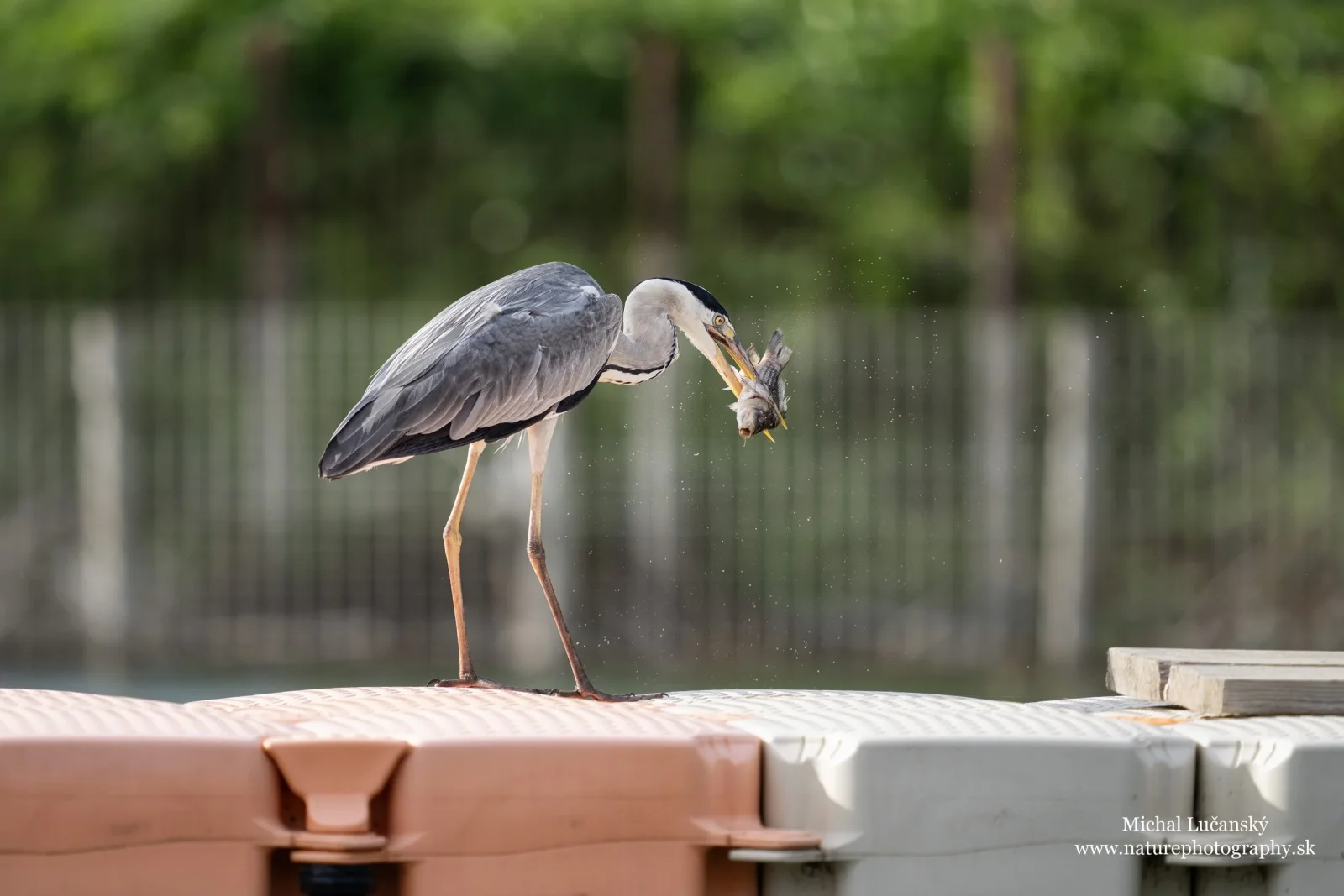
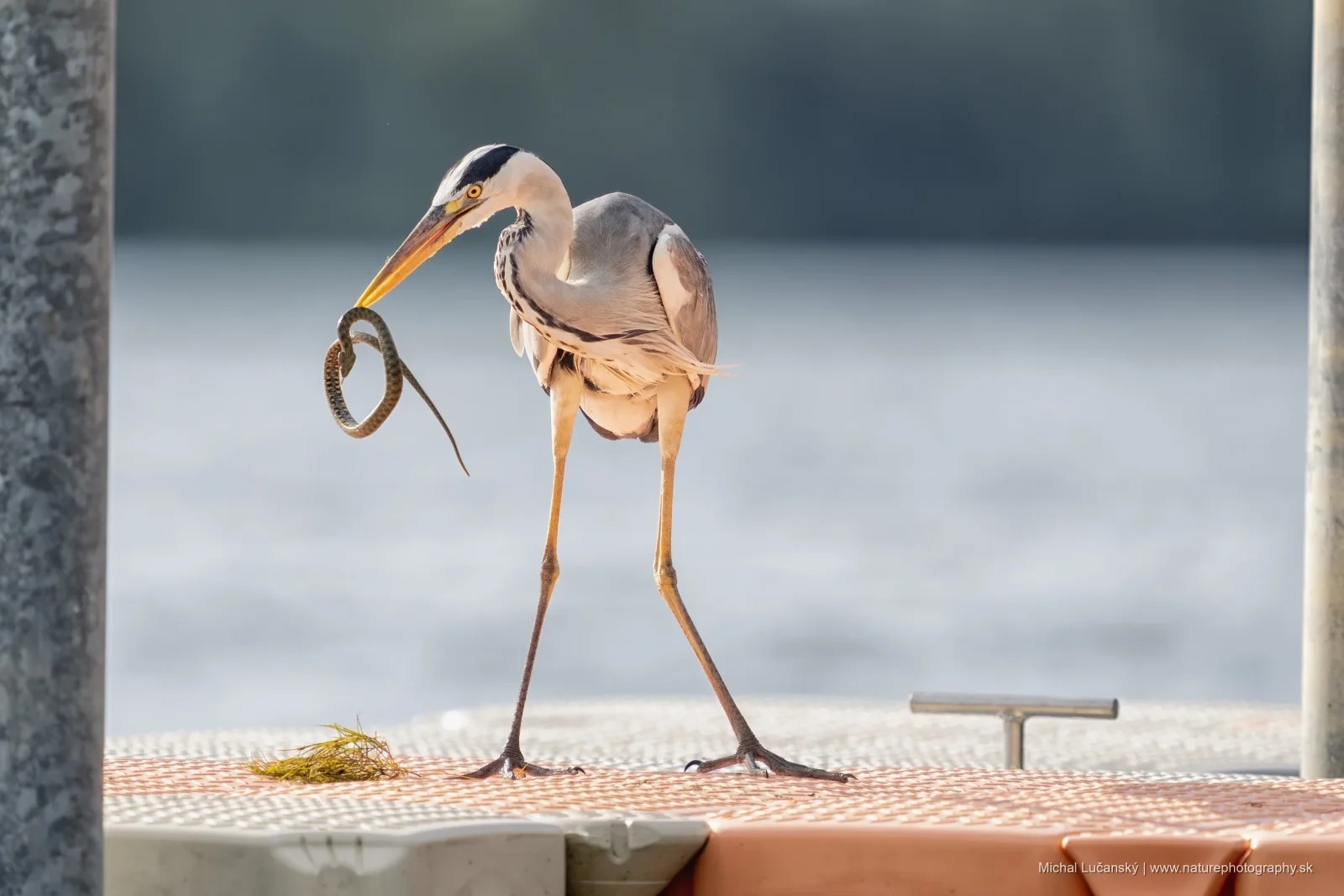
Just moments before reaching our destination in Crișan, we witnessed some real natural theatre. In front of us a grey heron appeared in the heat of the hunt – it had just caught a carp, which it was deftly hauling out of the water. It didn’t quite manage it, though. As if that weren’t enough, nearby it caught a dice snake, which it tried to overpower with its sharp beak. These were moments that not only took our breath away but also reminded us of the raw beauty and drama of the Danube Delta’s wildlife.
We ended the first day at our cosy accommodation, where a tasty dinner of freshly caught fish awaited us, straight from the waters we had just been exploring. The evening was given over to photography talk – we shared experiences with camera gear, tips and stories from the field. I was excited to try out the new Sony A9 III I had on test, and I was already imagining the shots I would capture in the soft light of dawn.
The alarm was set for early morning, for a 4:30 departure, and we all knew that another day full of incredible encounters with the Delta’s wildlife lay ahead. As the night slowly sank into silence, the air was filled with excitement and anticipation of the adventures waiting just over the horizon.
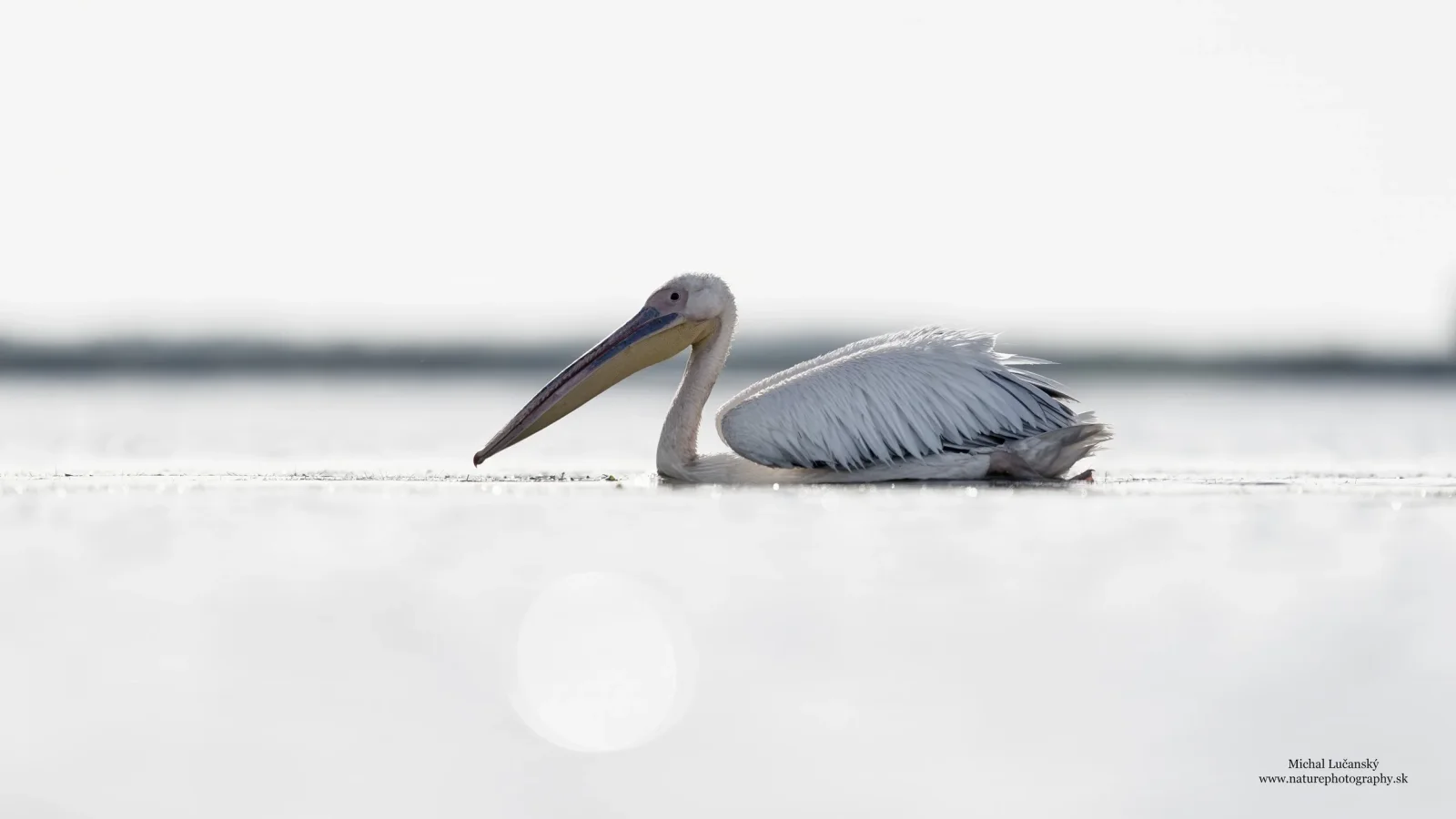
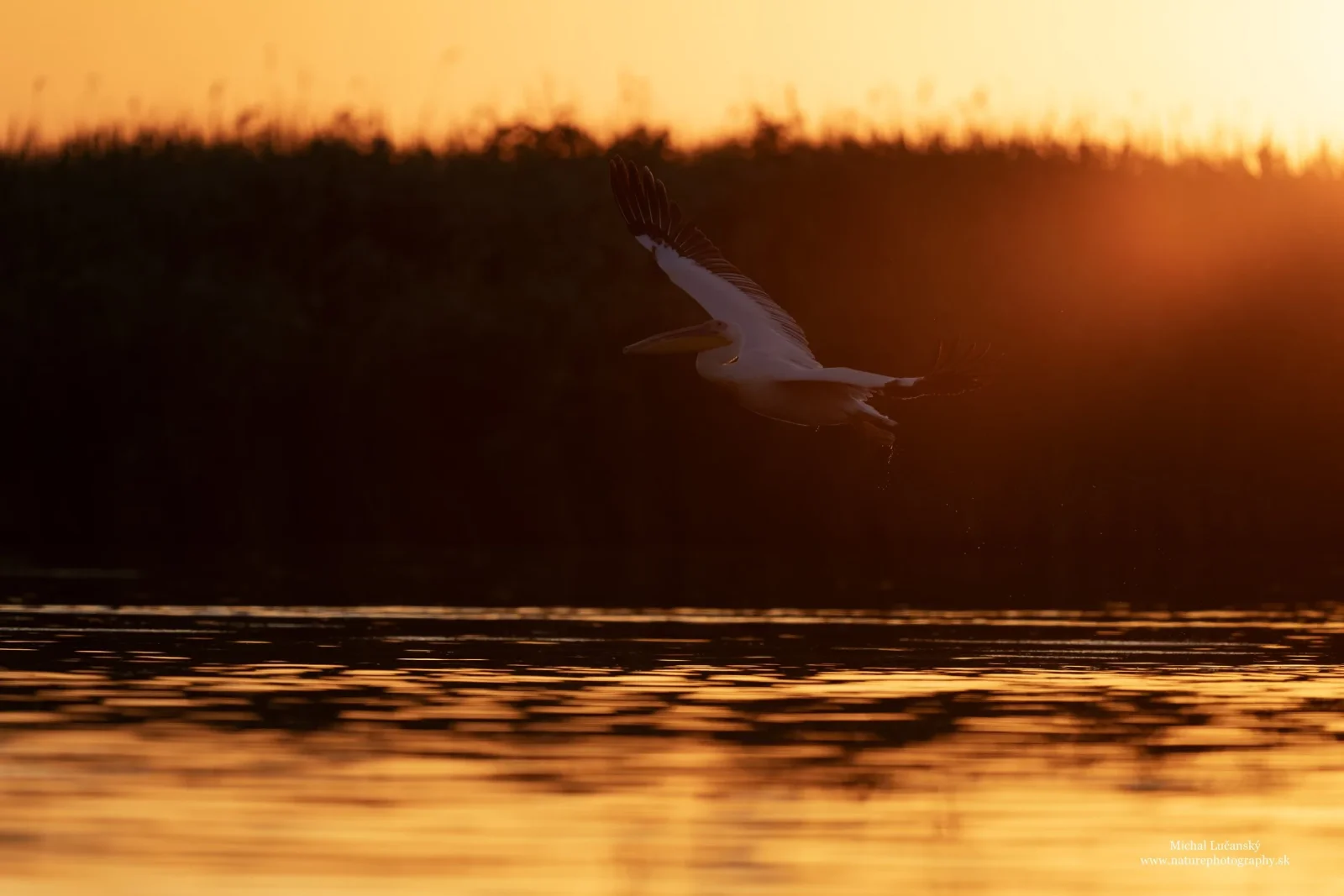
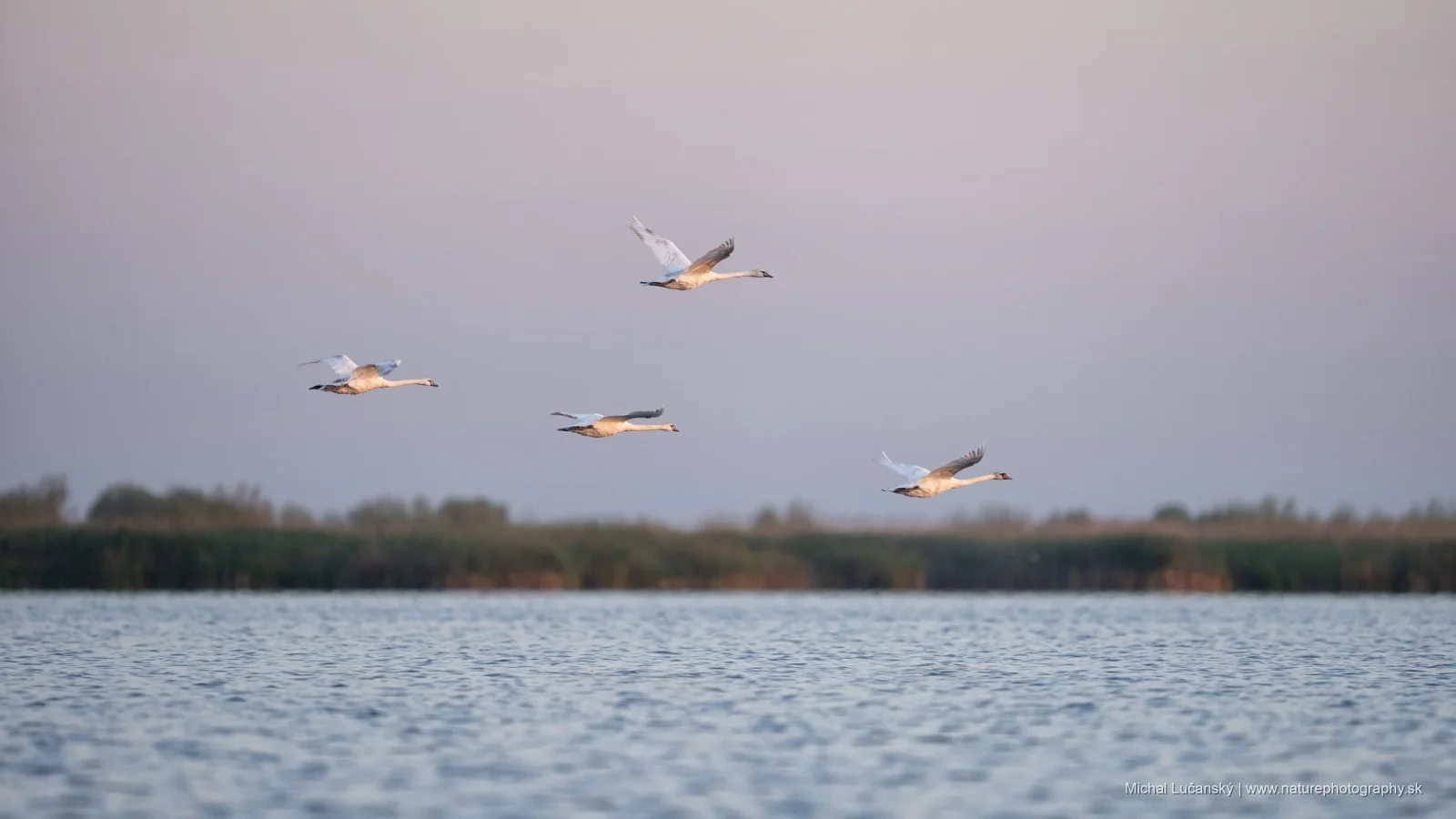
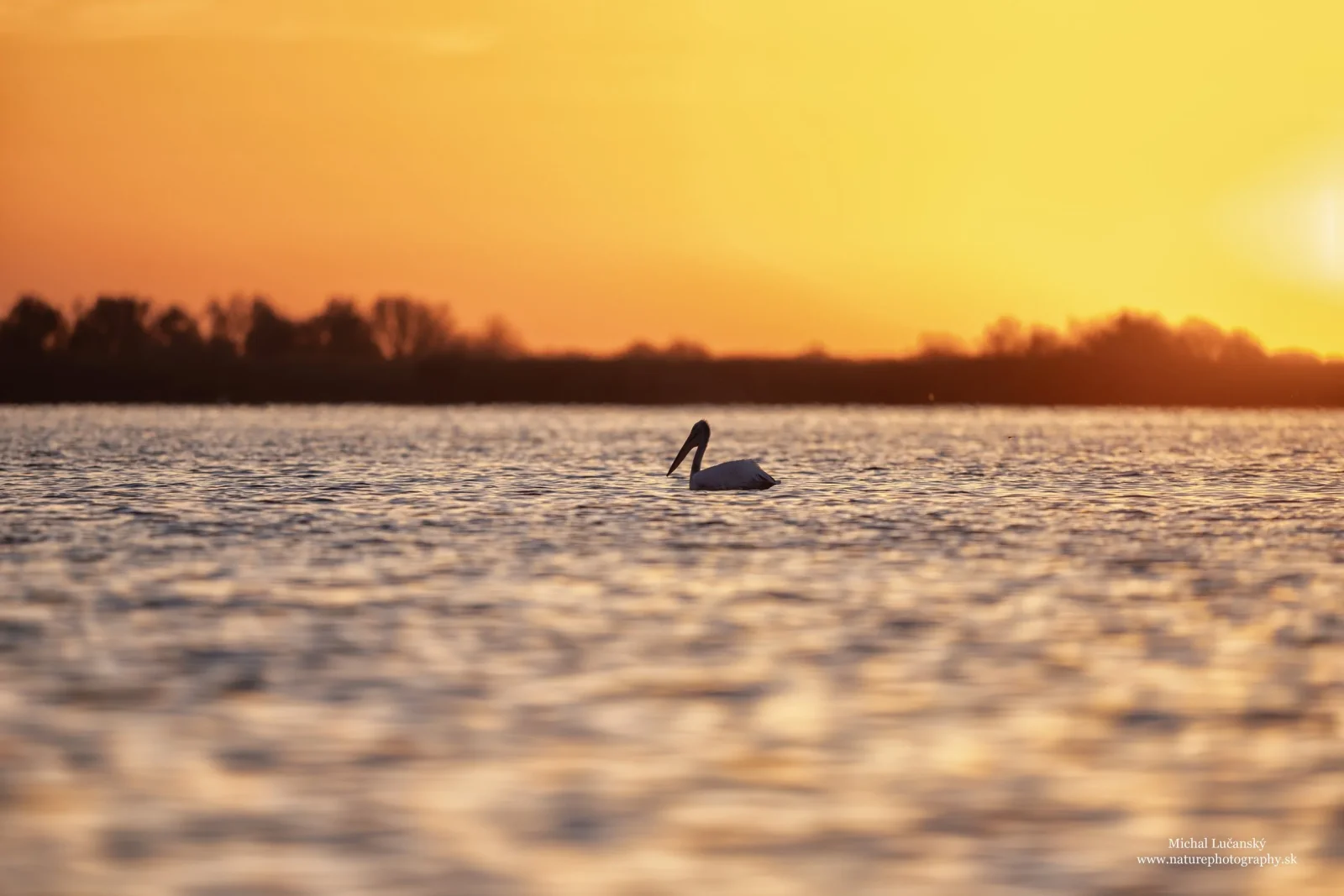
Day two started at 4:30 in the morning, when we set off to catch the sunrise over one of the larger lakes in the Danube Delta. The first morning light was illuminating the horizon, and we reached the lake just in time to capture pelicans moving gracefully across the water, surrounded by the soft colours of dawn. We enjoyed breakfast right there on the small boats, in the heart of nature.
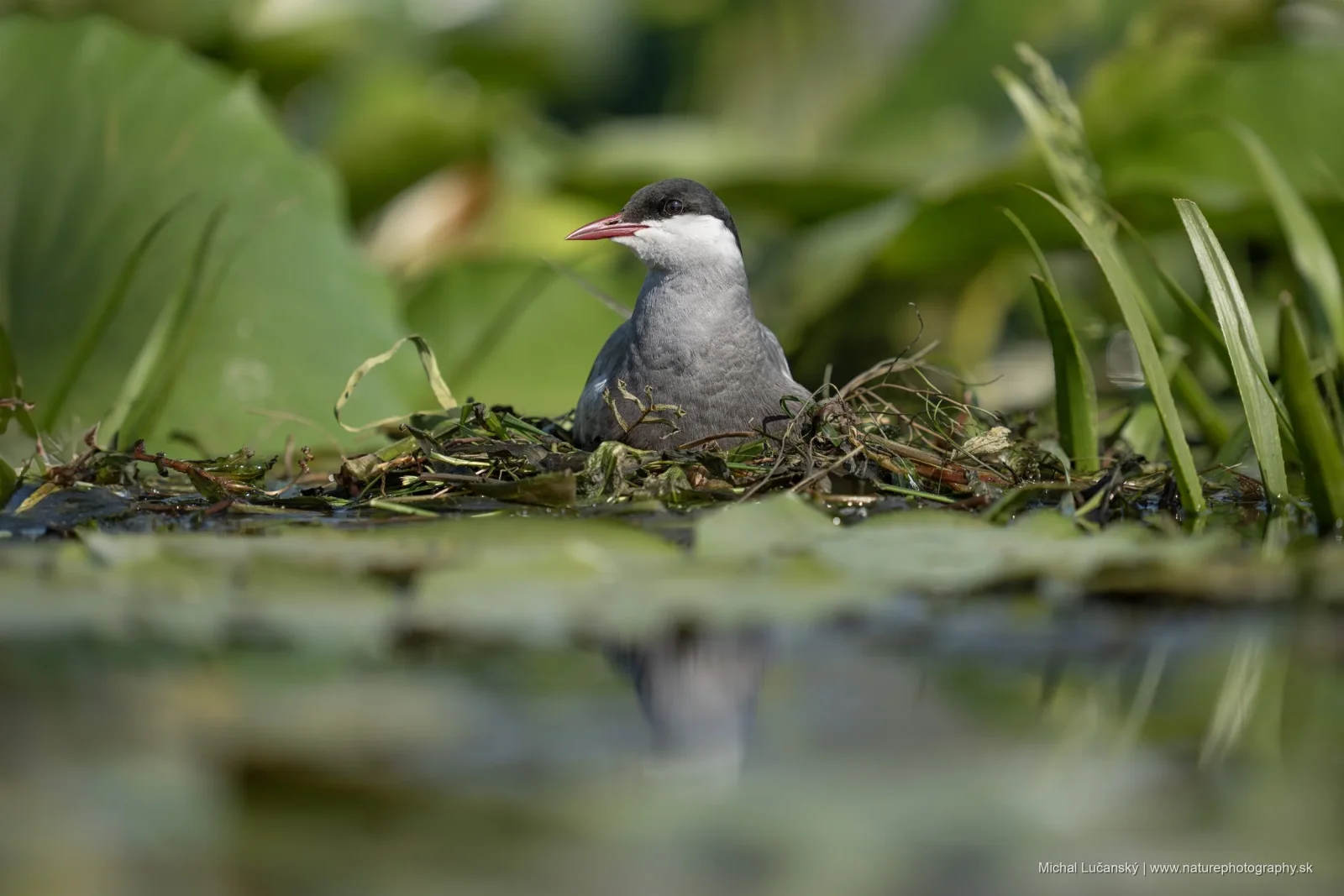
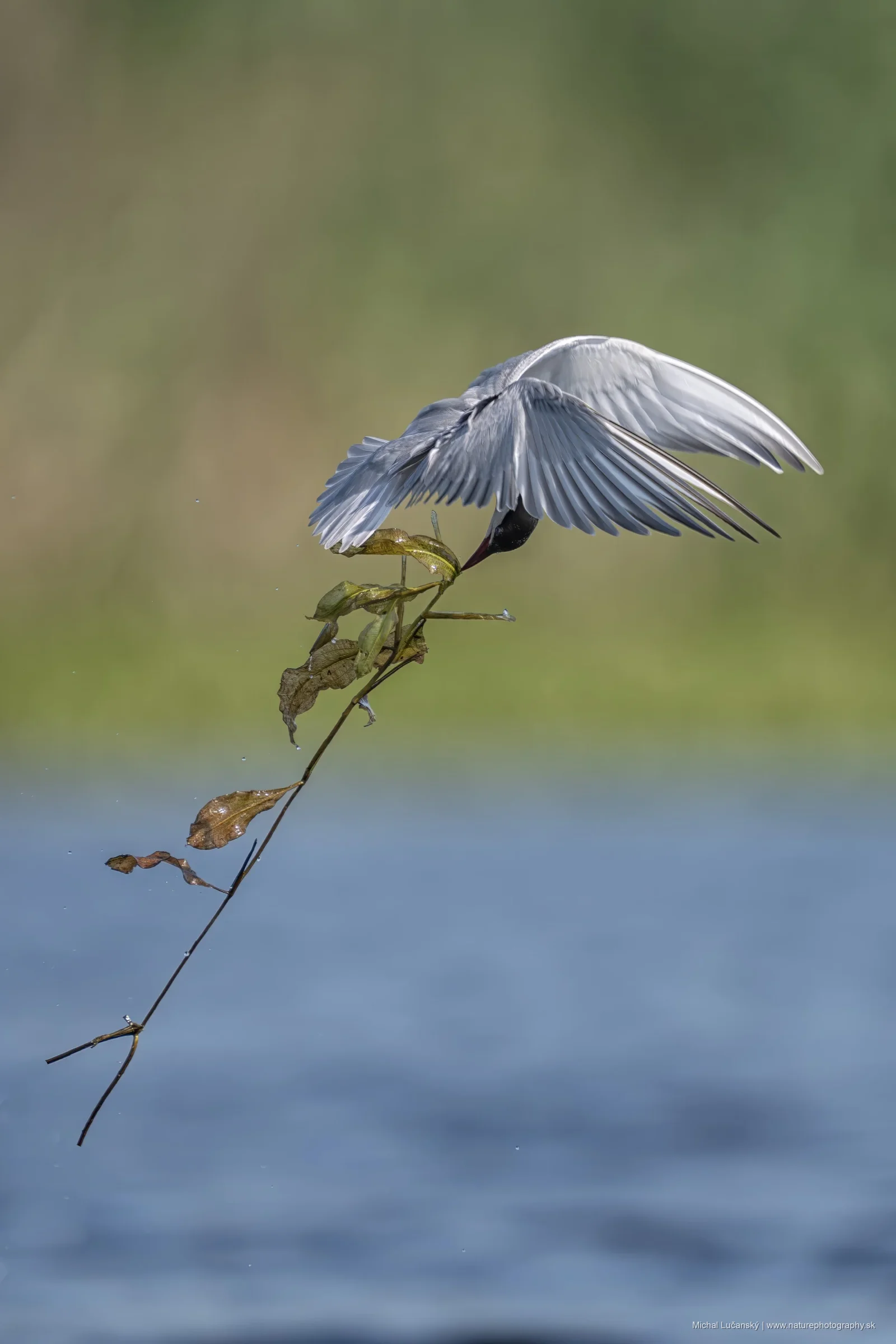
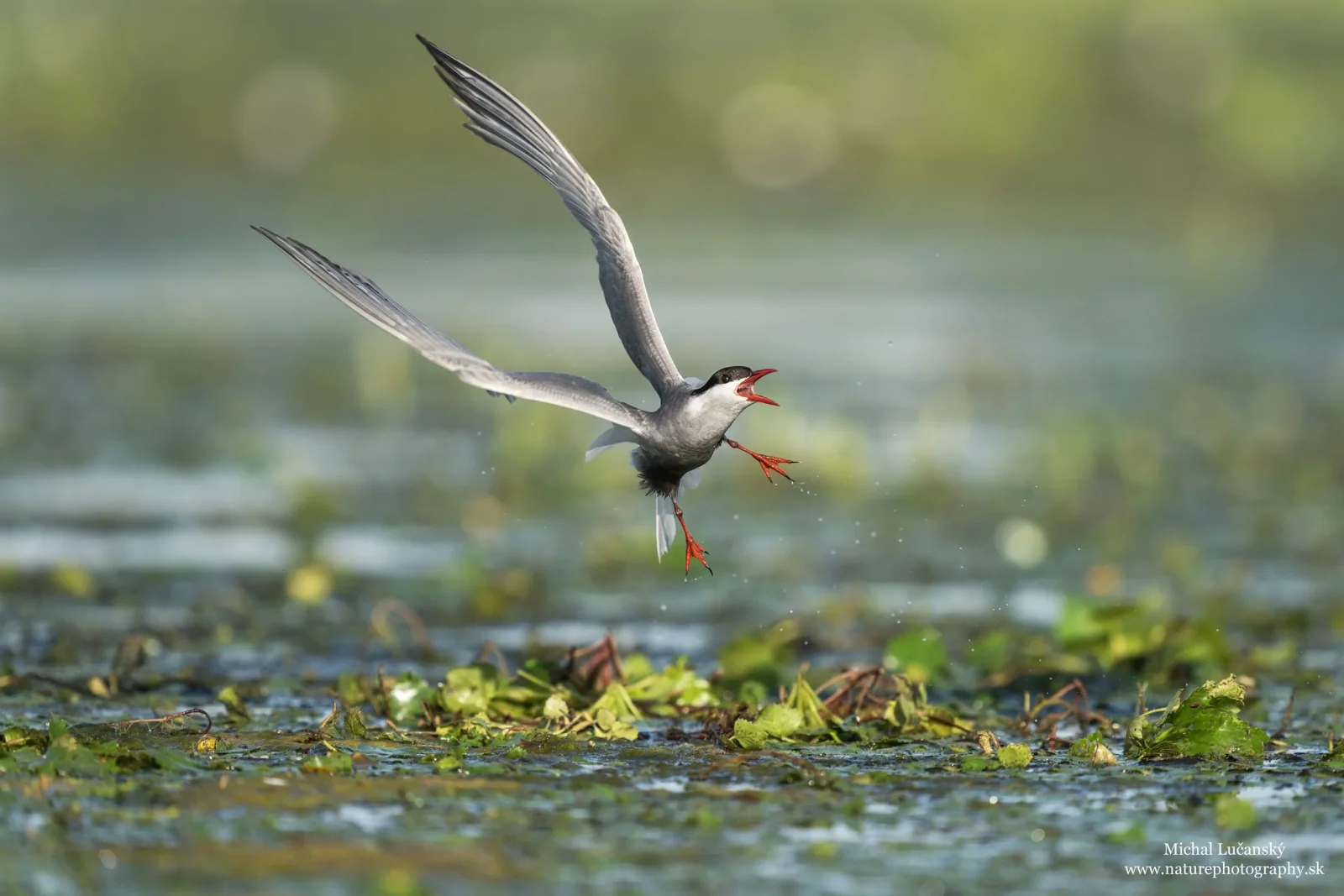
After sunrise we moved on to a colony of whiskered terns. Their activity was incredible – the birds were gathering material for their nests, which they built right on the water, on the aquatic vegetation. We also spotted Europe’s largest frogs, which were there in enormous numbers, underlining the diversity of the local ecosystem. With the morning’s adventure behind us, we returned to our cosy accommodation for a short rest.
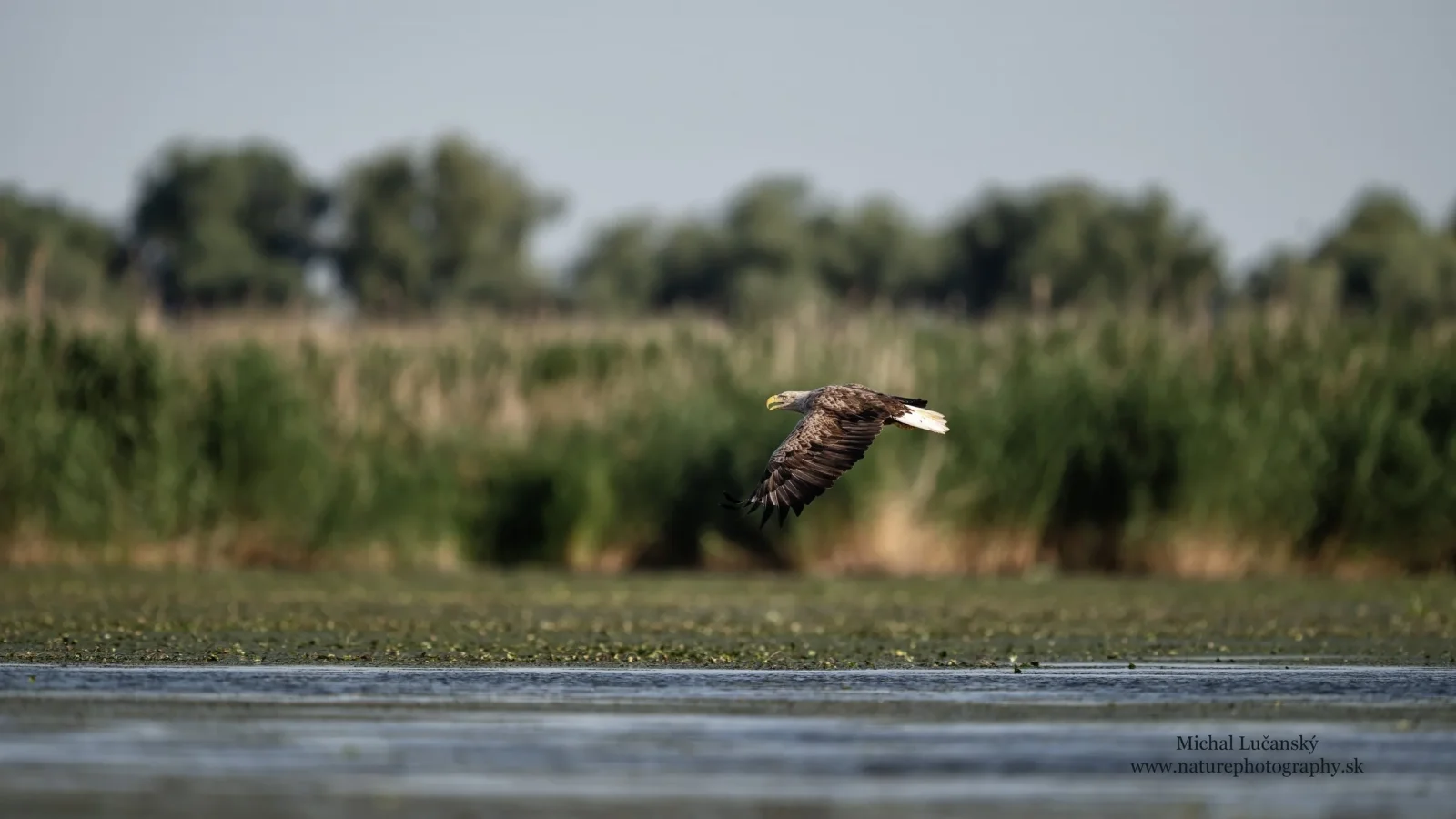
In the afternoon we explored another part of the Delta and its intricate channels. A glossy ibis with its shimmering plumage kept us pleasant company for a while. To our delight we also managed to see a second wildcat, which was a rare and exciting experience. We finished the day on a large lake, where numerous pelicans and cormorants put on a show for us. To round it all off, a white-tailed eagle, the true king of the delta, soared majestically above us – a magnificent end to a day full of unforgettable experiences.
On the third day we planned a trip to the Letea area, one of the most interesting places in the Danube Delta. Letea is known for its unique landscape, which combines sand dunes and wooded areas with ancient trees, some of them more than 700 years old. The area is also home to the famous semi-wild horses, which are descended from domesticated horses and have adapted to life in the wild. To make the most of our time, we again set off at 4:30 in the morning.
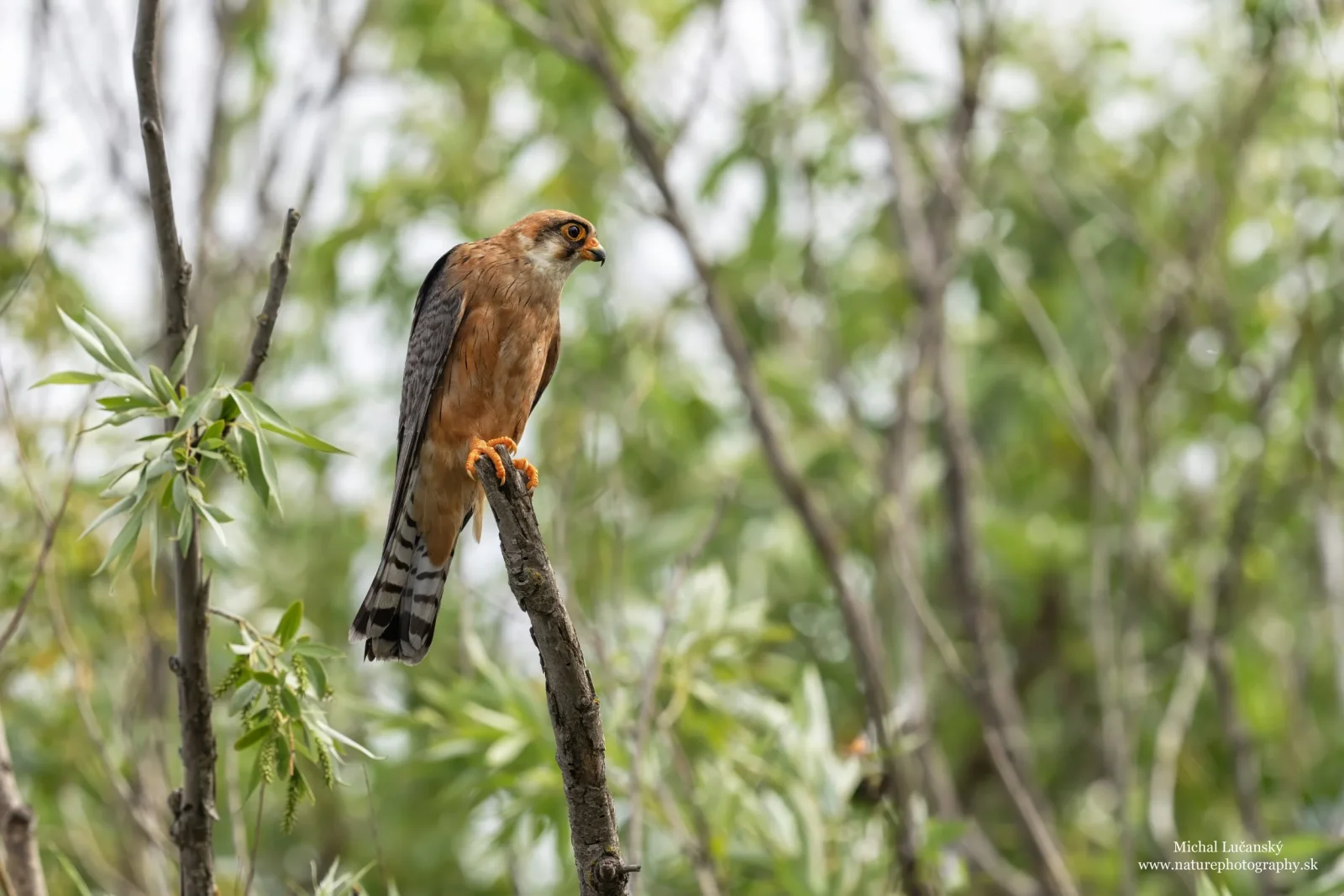
We sailed across several larger lakes, enjoying the calm morning waters. As we approached Letea, we began to spot semi-wild horses on the banks of the channel, grazing at a leisurely pace and adding to the charm of our journey. When we arrived at the small port village of Letea we were in luck and managed to photograph a beautiful red-footed falcon surveying its surroundings.
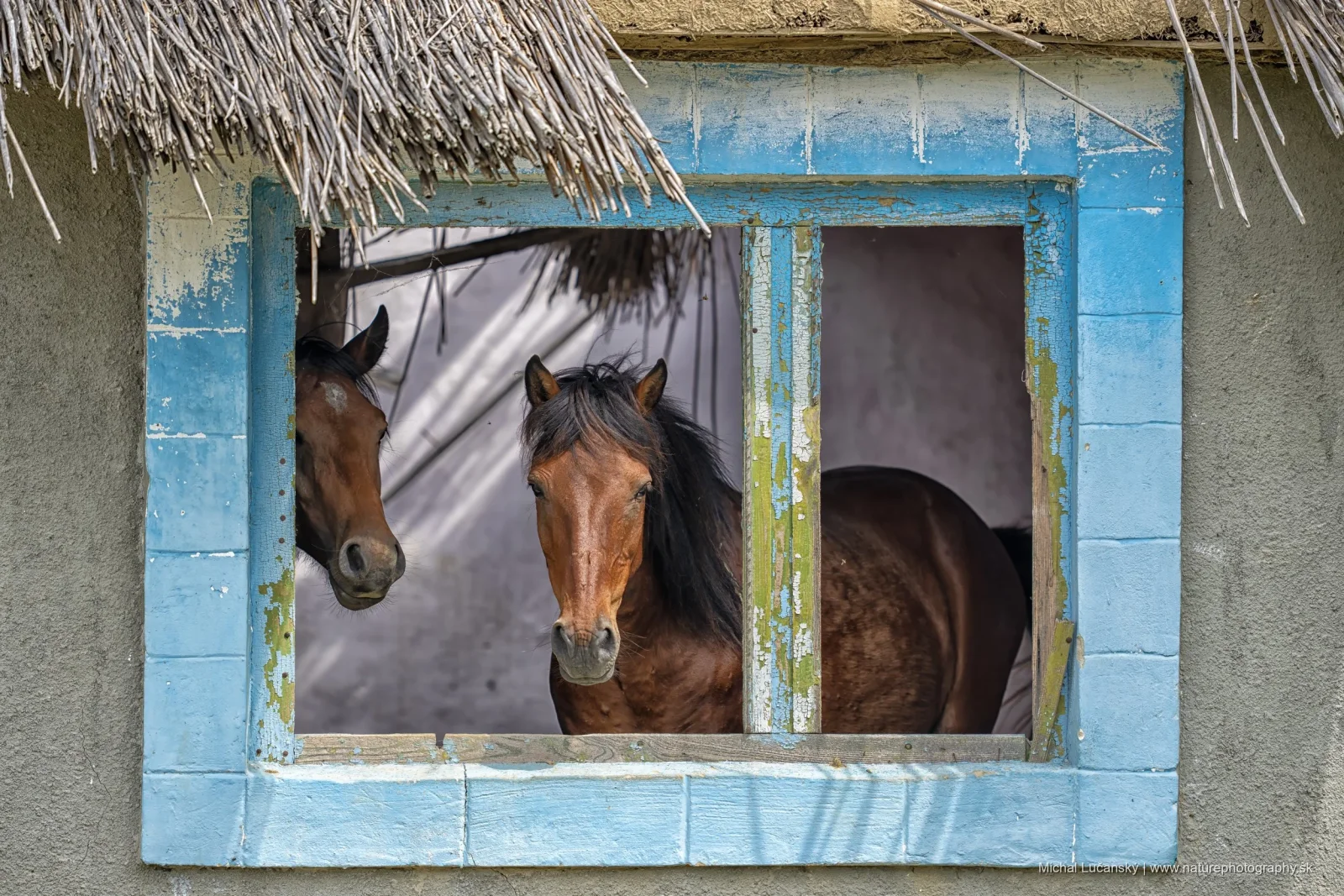
Our stay in Letea was full of unforgettable experiences. Local guides offered us off-road vehicles to explore the area, which allowed us to head off-road onto the sand dunes – a rarity in the Delta and a striking contrast to the surrounding marshland. The most iconic part of the experience was seeing the remains of old villages slowly being reclaimed by nature, with semi-wild horses wandering between the abandoned buildings – a powerful reminder of the bond between history and wilderness that is unique to this region.
After visiting Letea we continued towards the town of Sulina, which has a fascinating history and is today one of the most interesting places in the Danube Delta. Sulina was once an important port and trading centre. Thanks to its position at the mouth of the Danube, in the 19th century Sulina was the seat of the European Commission of the Danube and played a key role in regulating shipping in this part of Europe. The town was a cosmopolitan hub, home to people of many nationalities – Greeks, Armenians, Italians, Jews and many others – which left behind a rich cultural heritage.
Today, however, Sulina is a far cry from its former glory. Many buildings are neglected and in poor condition, offering a sad view of a town that once teemed with life and trade. A walk around the town took us past historic buildings and narrow streets that today bear witness to its glorious past, but also illustrate its gradual decline.
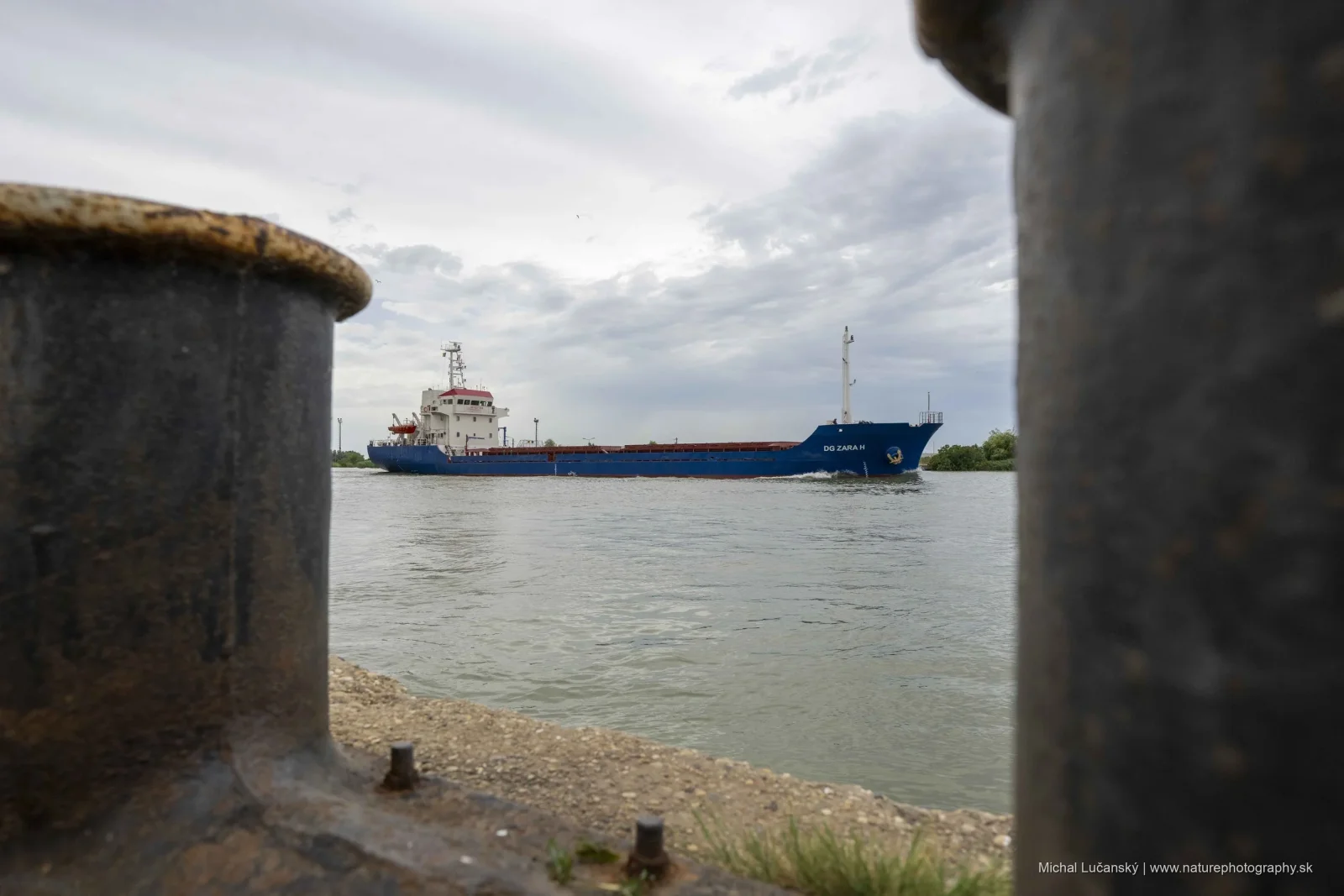
On our journey we also reached Mile 0 on the Danube, a very symbolic spot. Interestingly, Mile Zero on the Danube is not at its source but right here, at its mouth on the Black Sea. This point marks the start of the river according to the nautical measurements that underpin international shipping in the region. The place reminded us of the importance of the Danube as one of Europe’s most important waterways and of its significant role in the history of transport and trade.
The next day began early in the morning, when we chose Caraorman as our destination – a unique area within the Danube Delta, known for its diverse ecosystems and rich biodiversity. Caraorman is characterised by its ancient oak forests, extensive wetlands and sand dunes, making it an ideal environment for many bird species and other wild animals.
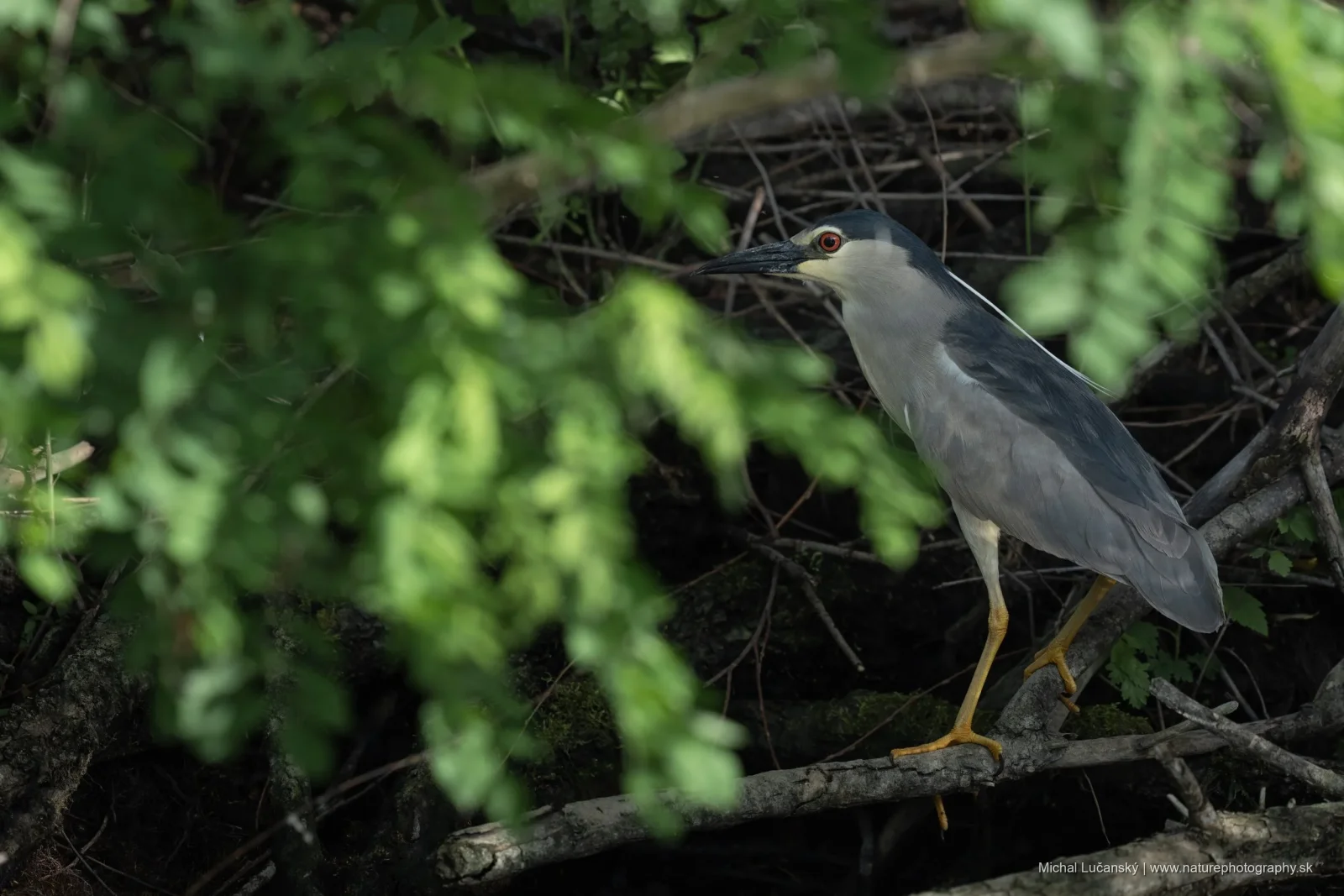
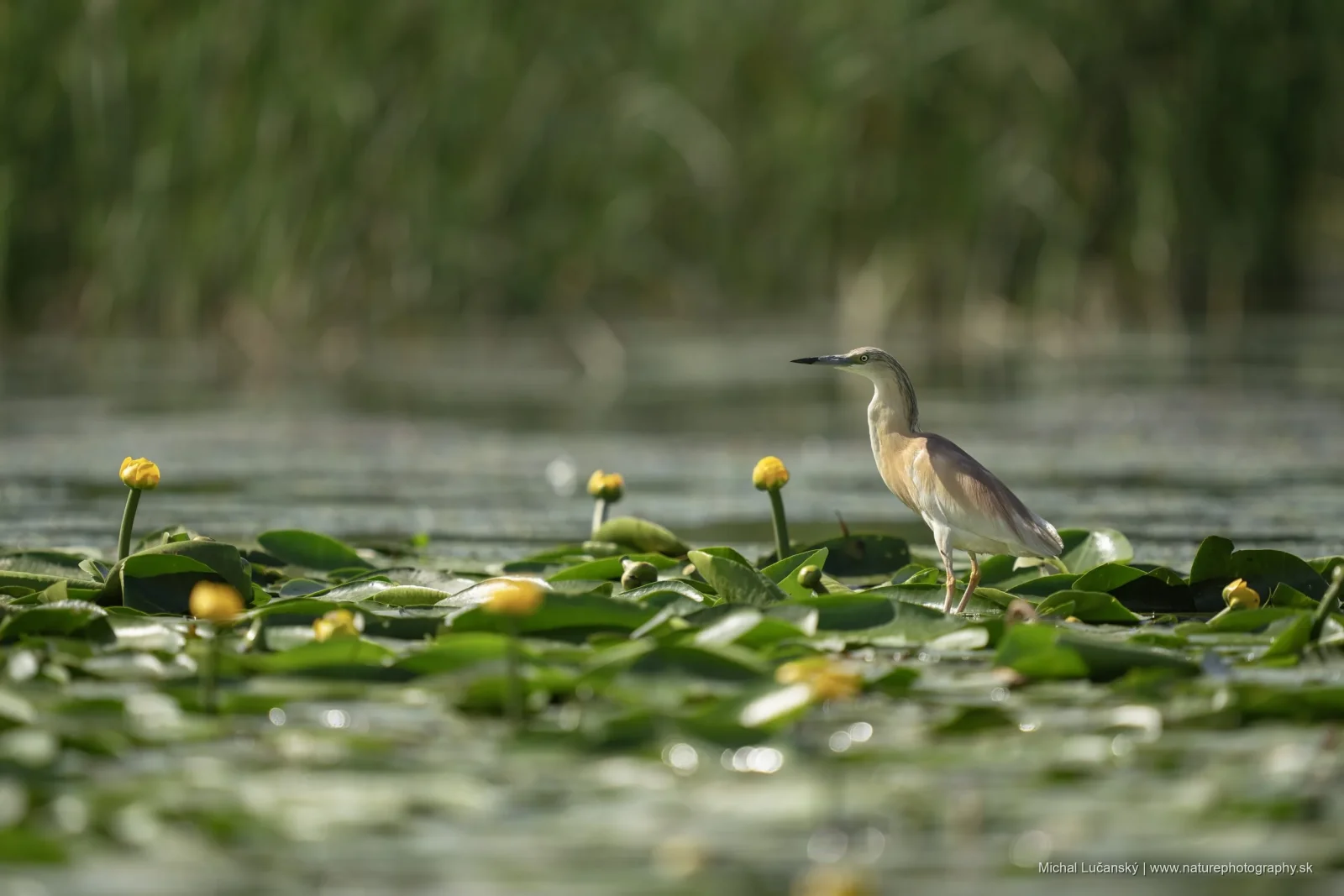
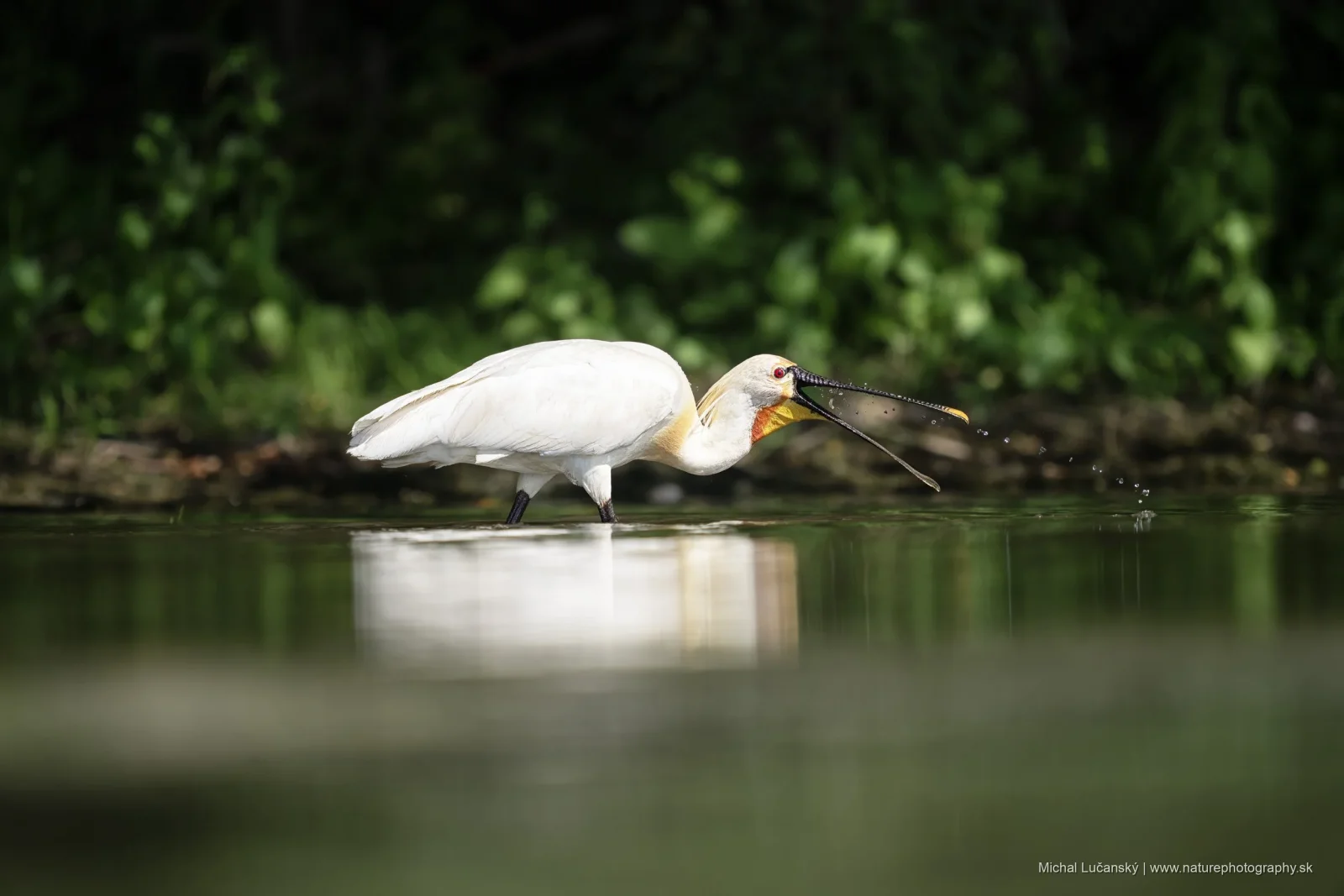
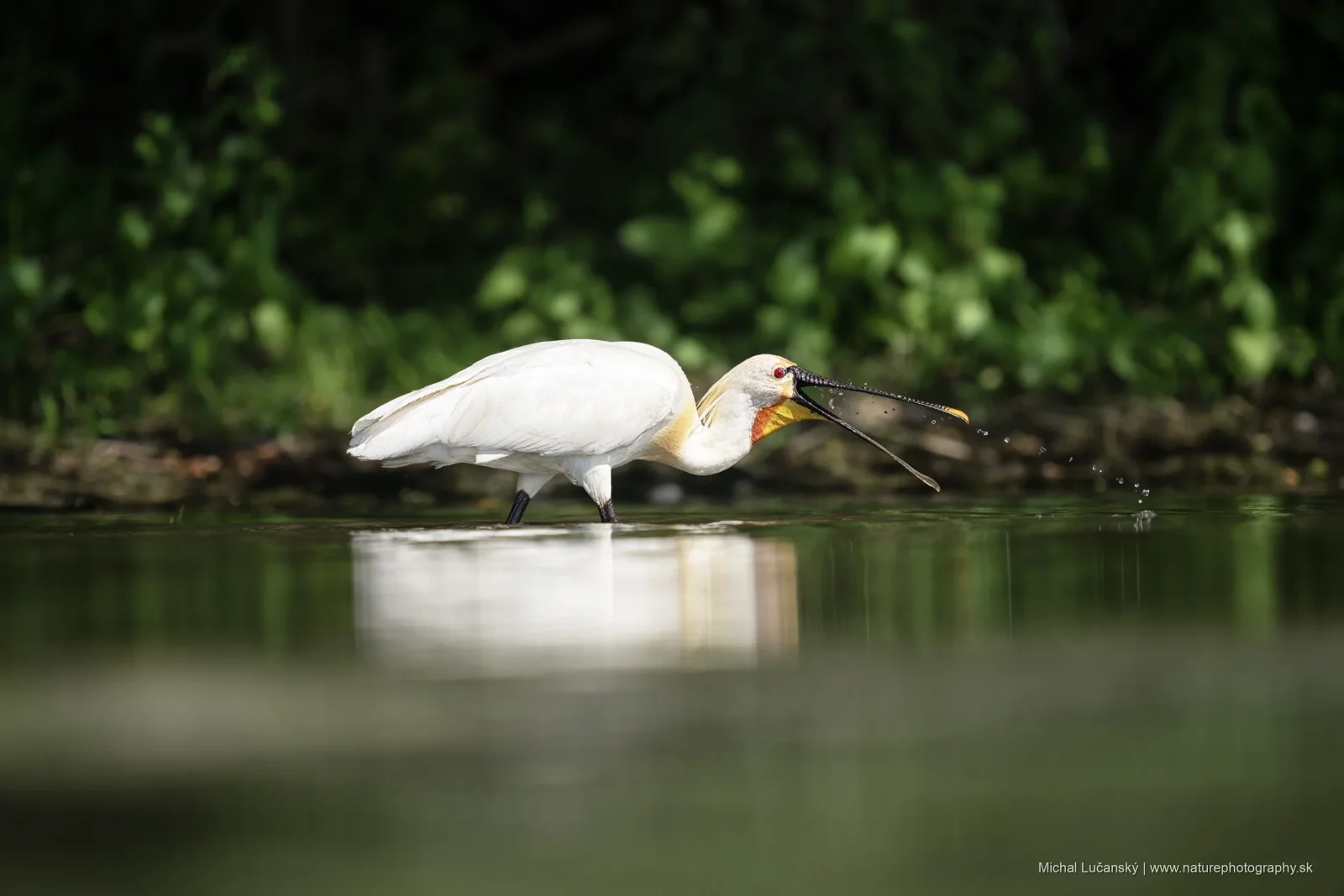
As we walked through this picturesque landscape, we were lucky enough to photograph several new species, including the elusive black-crowned night heron, the striking Eurasian spoonbill and the elegant grey heron. I had hoped to find some reptiles during our visit to Caraorman, but given the summer timing of our visit I had no luck. Despite the heat, we enjoyed our time in a small marshy area full of birds.
Bee-eaters were constant companions, appearing in impressive numbers and adding vivid splashes of colour to the landscape. Now and then we also caught sight of European rollers, more beautiful birds that added to the appeal of the place. Our visit was made even better by a stop at the local shop, where we met friendly locals and enjoyed the charm of the area.
As the sun beat down relentlessly, we returned to our accommodation, feeling a mix of happiness at our experiences and tiredness from the heat. It had been a rewarding day spent exploring the natural beauty and wildlife of Caraorman.
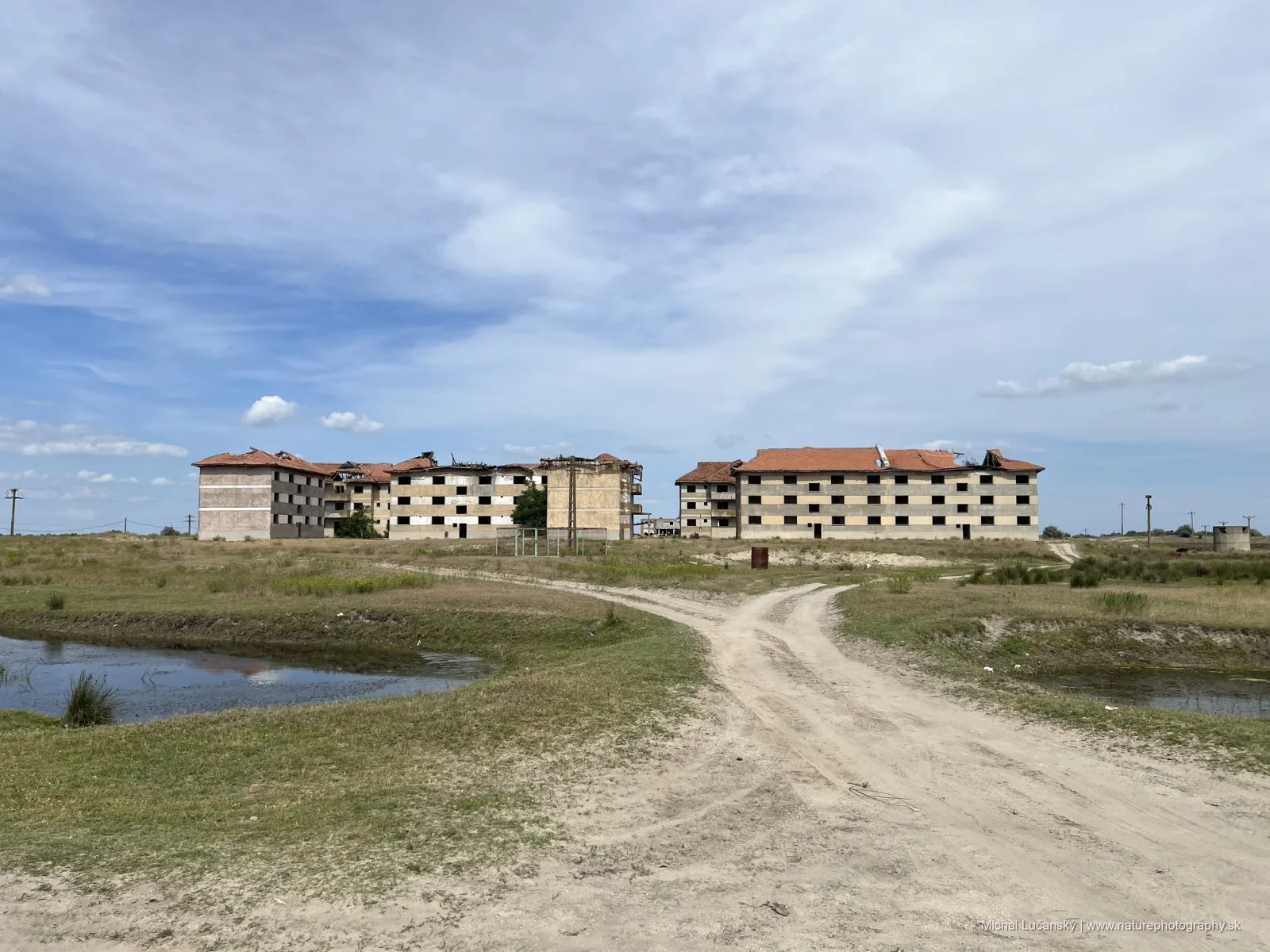
The next day was meant to be a rest day, but our group decided to set off early in the morning for Letea. We wanted to try classic “camping out” and photographing from hides. Unfortunately, the weather changed, and in light rain things didn’t go well photographically. After a few hours we decided to end our attempt and returned to the accommodation for lunch.
On the way back I decided to leave the main road and go through an abandoned village. It was a fascinating sight when I came across a large herd of semi-wild horses grazing freely in the surrounding meadows. The outskirts of the village were dotted with the ruins of abandoned orchards and houses, where hoopoes were playing, hopping between the old structures. I have kept this moment in my memory as an example of the beauty of nature and of the life that still survives even in such abandoned places.
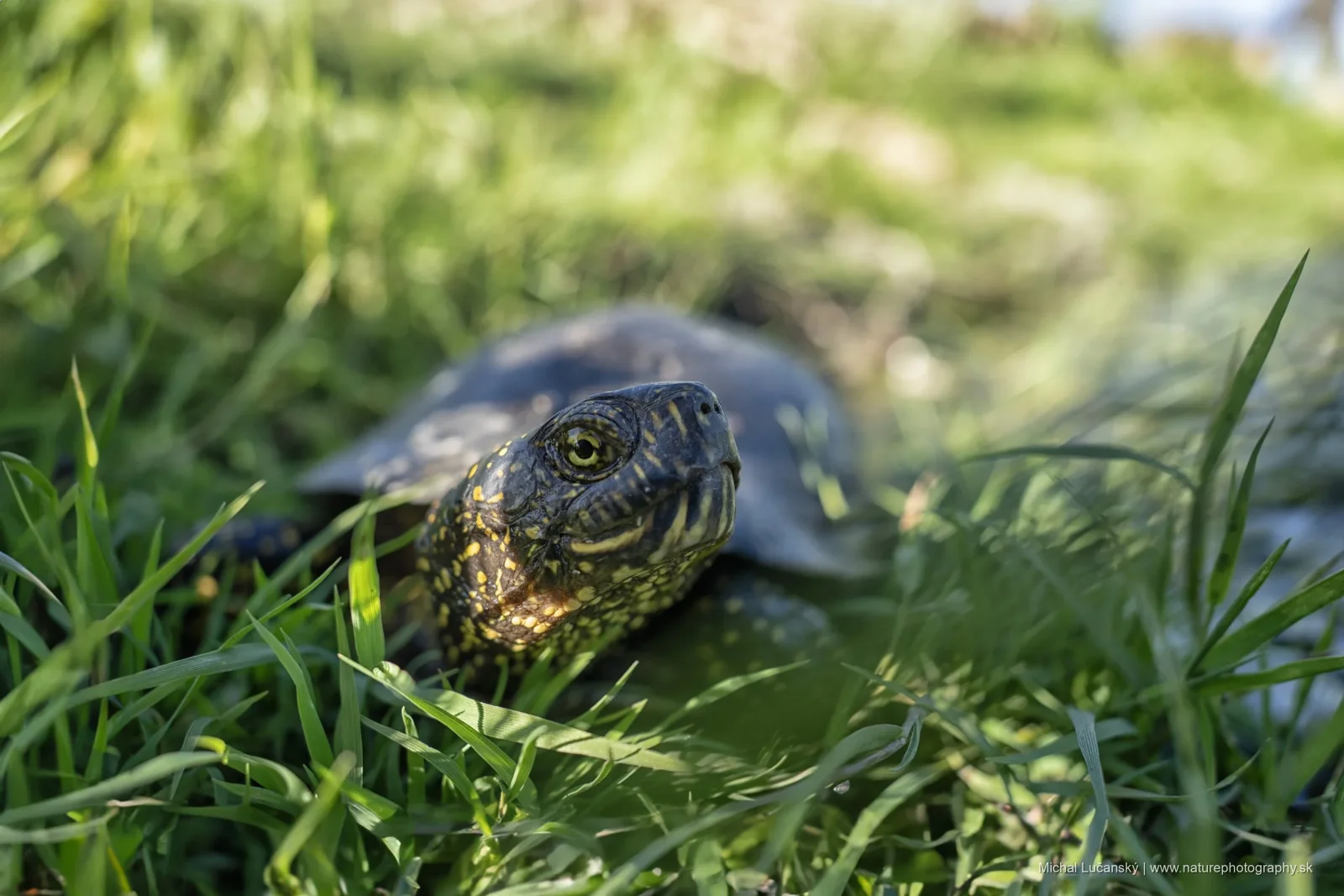
The storm eventually moved further north, so we decided not to waste time at the accommodation and to explore the surroundings instead. Right away, in the first surprise of the afternoon, a fellow photographer found two European pond turtles in a garden, which a local dog had picked out as toys. We managed to rescue them and move them to a nearby oxbow lake. After a short macro shoot, the turtles went back to their own habitat.
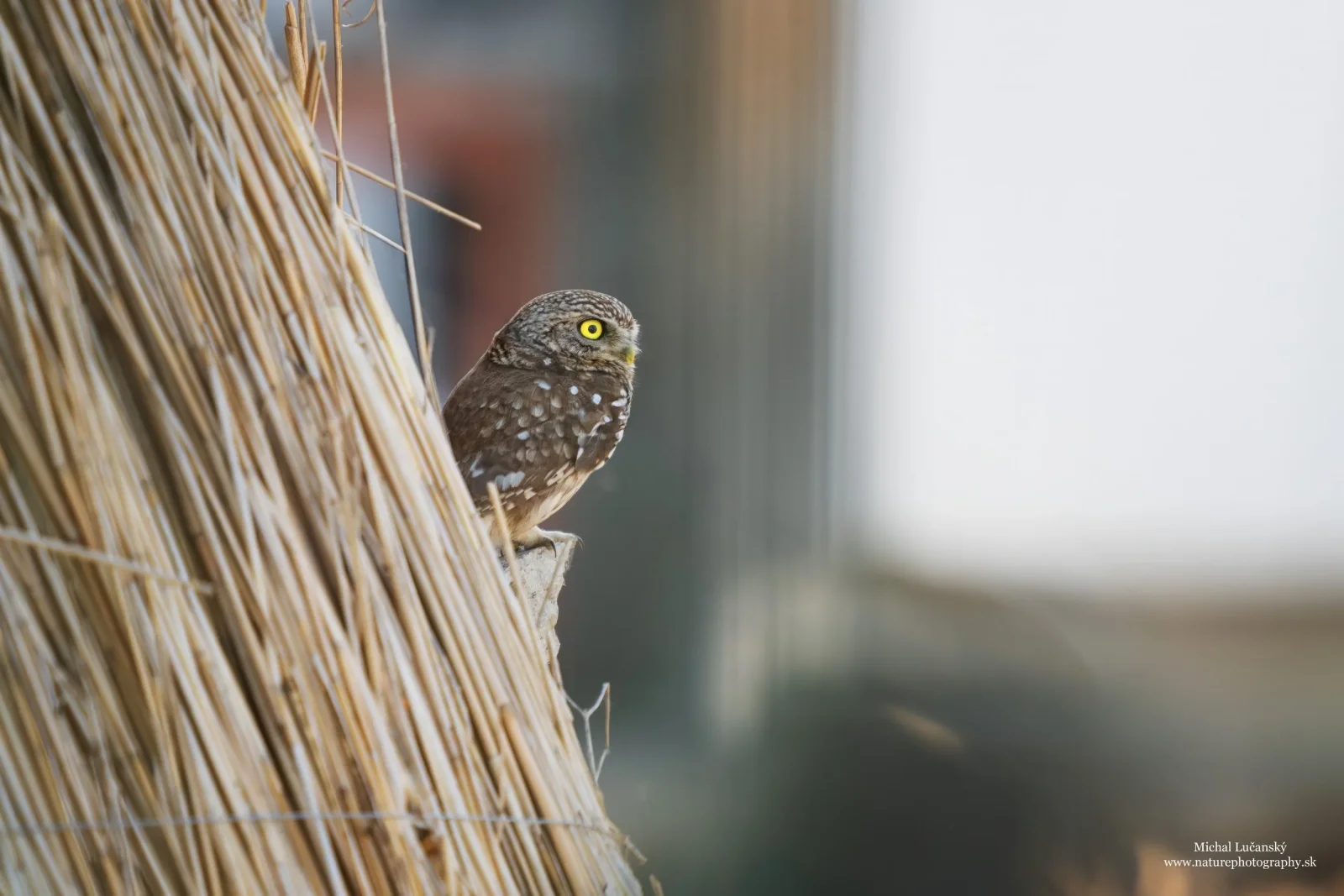
So we carried on exploring the area, when we heard a little owl calling. We tried checking the local cemetery, and what do you think we found there? A small owl sitting on a haystack. The shoot didn’t last long, as movement in the cemetery scared it off.
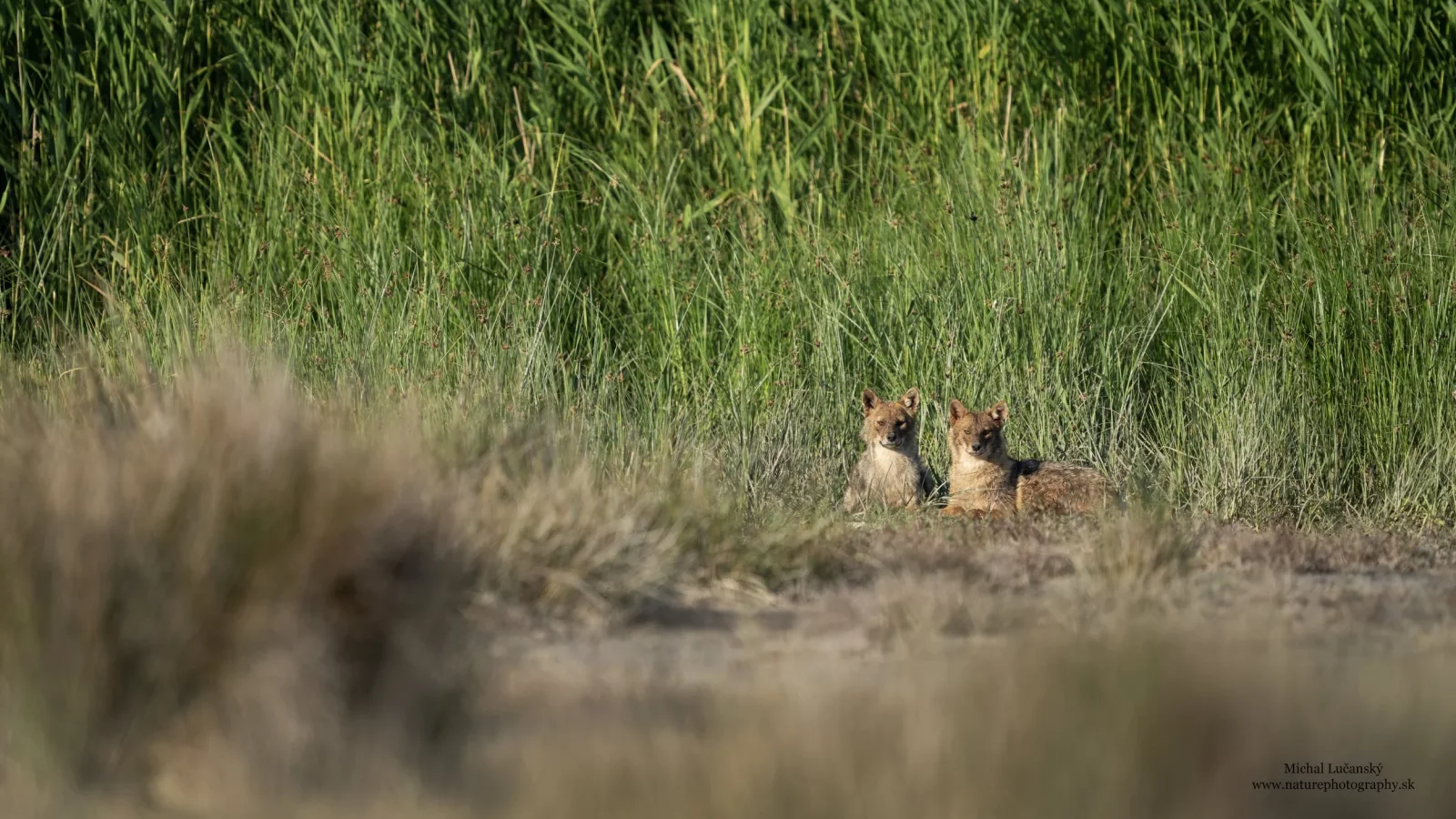
On the way back we noticed movement in the reeds, and two golden jackals showed themselves. Simply the perfect end to a day in which we could enjoy the beauty and diversity of the wildlife all around us.
After our last night in Crișan we headed back to the port – a somewhat bittersweet farewell to the calm waters and teeming life of the Delta. As we left, we were treated to a magnificent sunrise over the lake, painting the sky in shades of pink, orange and gold. It was as if nature were bidding us farewell with one last grand performance. The still water reflected the colours of the sky, heightening the scene even further and creating a moment of peace and wonder that reminded us of the beauty we had experienced during our stay in the Delta.
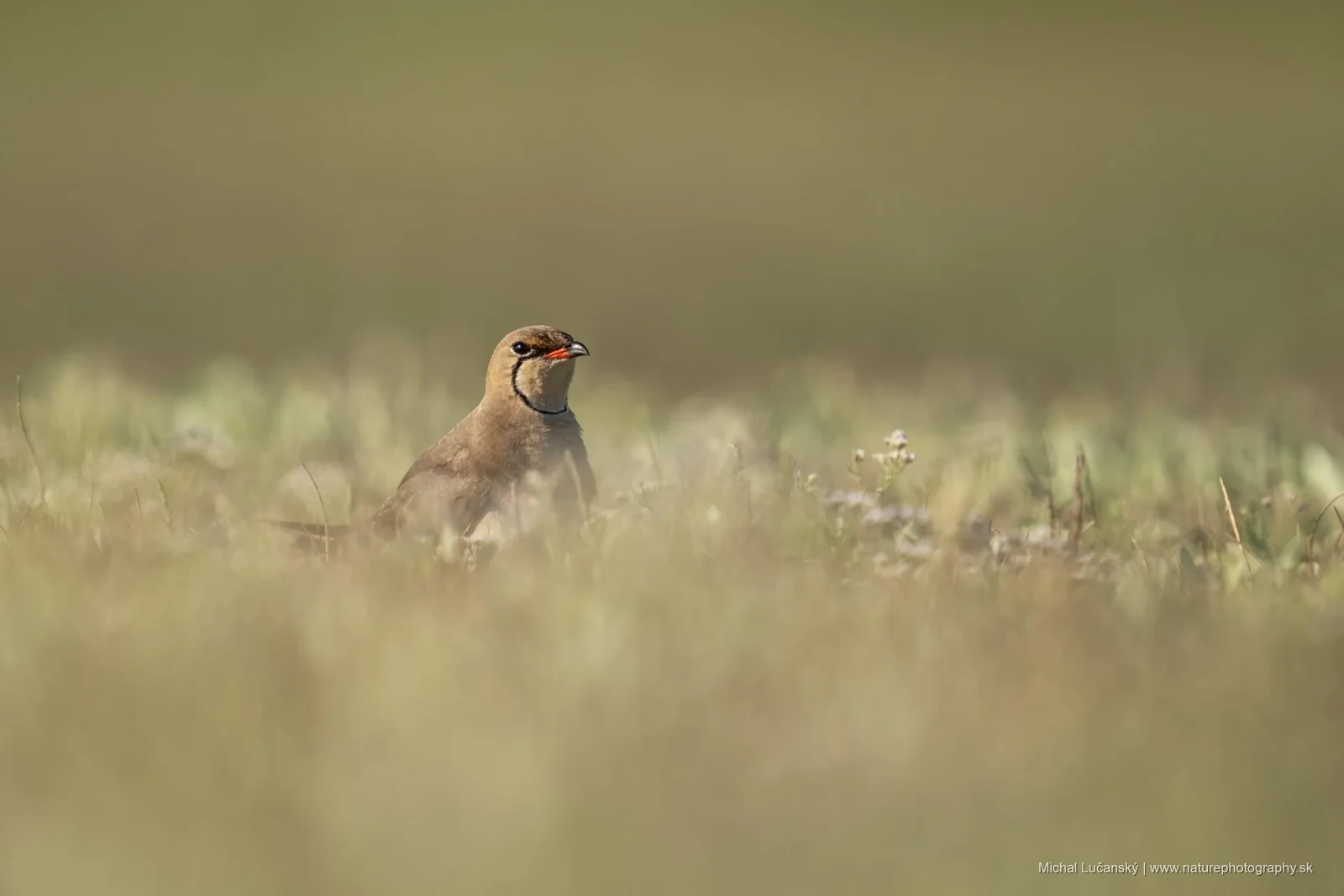
Our next destination was Constanța, but we didn’t head there straight away. Instead, we stopped at several well-known birdwatching sites. One of the highlights was Vadu, where we were lucky enough to observe a Caspian tern. We also had the chance to photograph the beautiful collared pratincole – an exceptional bird with graceful flight and striking plumage.
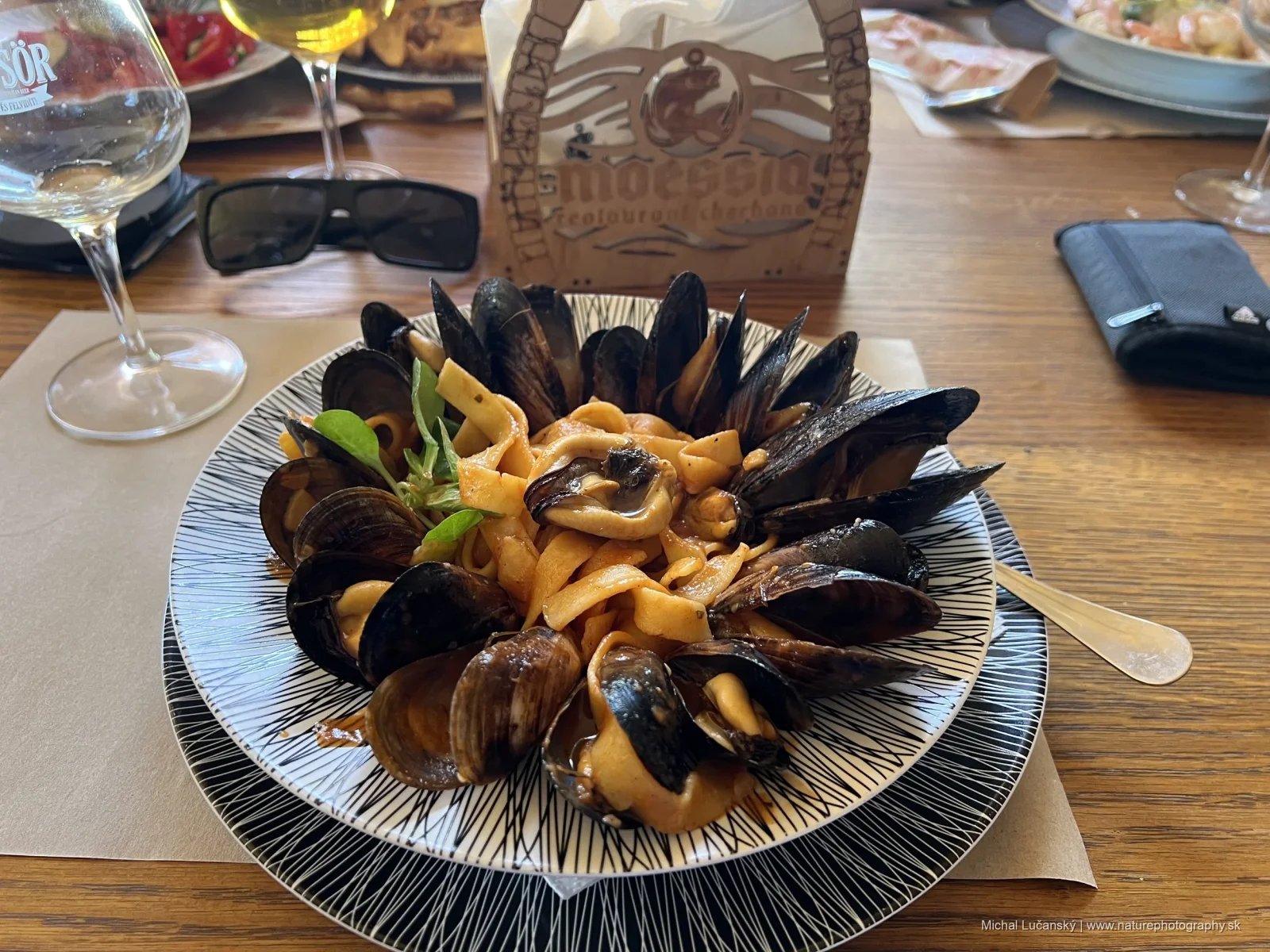
After a successful day of birdwatching we continued to Constanța, where we enjoyed a well-earned dinner. Constanța, a port city on the Black Sea coast, offers a mix of history and modernity. Walking through the city, we were surrounded by reminders of its ancient Greek and Roman heritage, with ruins, grand architecture and the iconic Constanța Casino – a magnificent Art Nouveau building overlooking the sea. The atmosphere was lively yet relaxed, with the sea breeze and the sound of the waves giving the place a unique charm. It was the ideal spot to unwind and reflect on our journey so far.
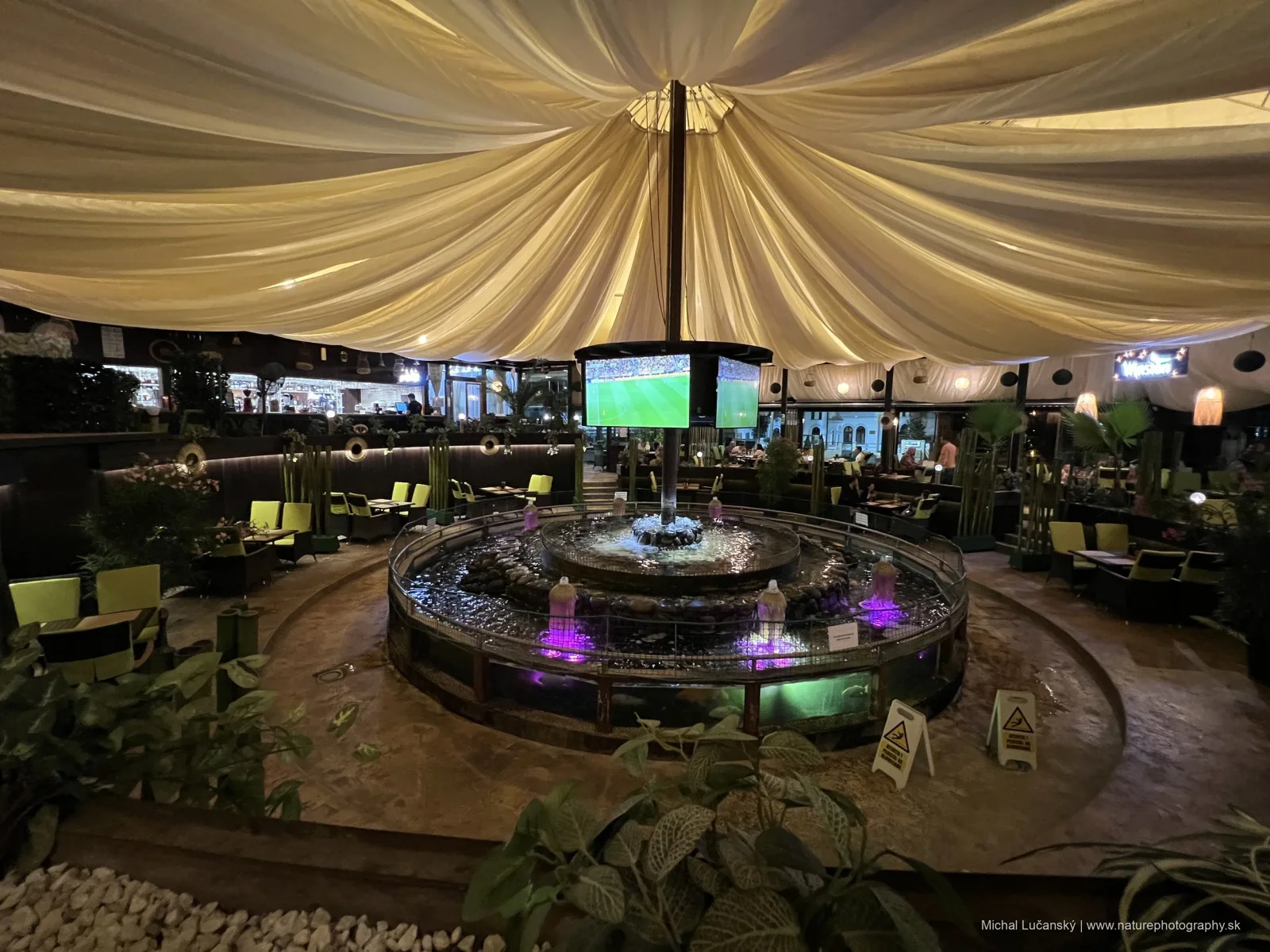
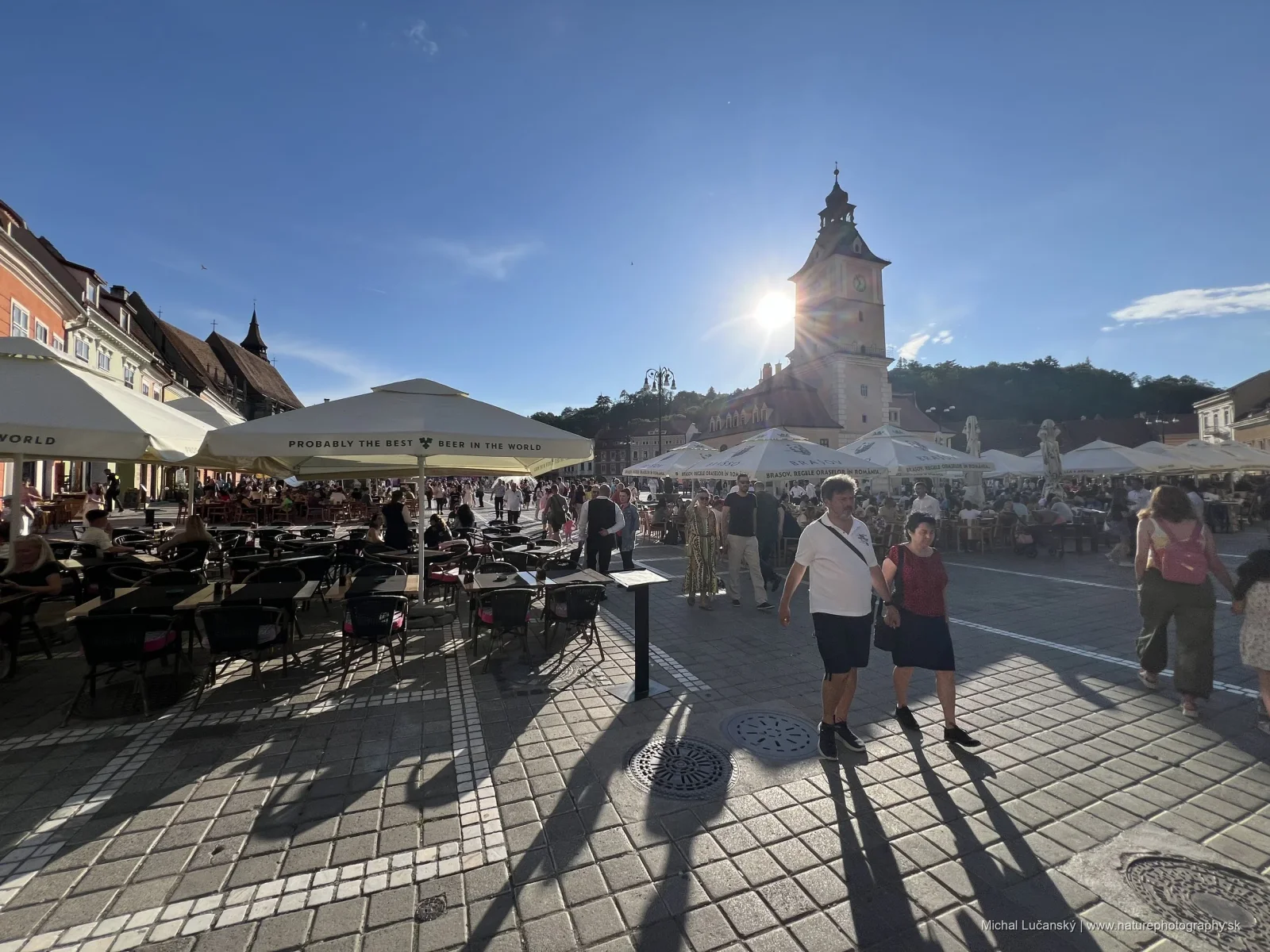
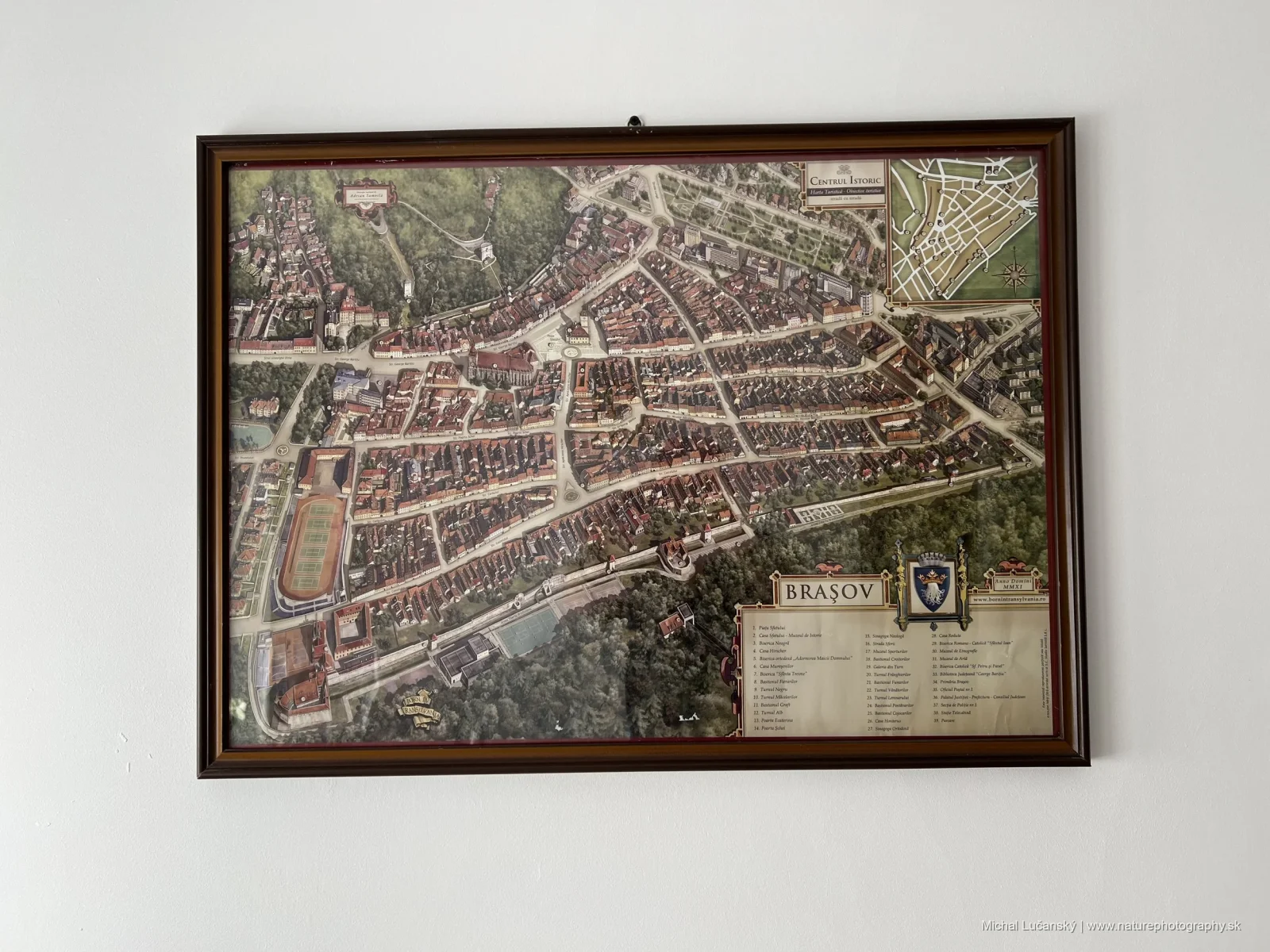
After Constanța we headed for Brașov, a charming city tucked away in the Carpathians. Brașov is known for its medieval Saxon architecture, colourful Baroque buildings and the impressive Black Church – a magnificent Gothic structure that is the symbol of the city. A stroll through its cobbled streets took us back in time, and the backdrop of the Carpathians on the horizon gave the city a unique atmosphere.
We spent the evening camera in hand, capturing the beauty of the city as the setting sun lit up the historic buildings. Dinner was just as special, with traditional Romanian flavours that added a delicious finishing touch to our last night on the road.
The next day we finally set off home, our hearts and minds full of unforgettable memories of the landscapes, nature and places we had discovered. Back in Slovakia, we felt a hint of sadness that our epic adventure had come to an end. It was a journey that will stay with us forever.
The Danube Delta is a true paradise for nature photographers, where vast landscapes meet an incredible diversity of flora and fauna. This UNESCO World Heritage Site, where the River Danube flows into the Black Sea, forms a maze of channels, lakes, wetlands and green islands. The Delta is home to more than 300 bird species, including rare and migratory species such as the Dalmatian pelican, the pygmy cormorant and the majestic white-tailed eagle. Thanks to its diverse ecosystems, from willow forests to reed-bed wetlands, it is one of the richest and most impressive natural areas in Europe.
Our guides on both trips were exceptional – they knew their way perfectly around the delta’s maze of waterways and showed us hidden places full of life. Although their English was limited, their enthusiasm for the delta and their knowledge of local conditions carried us through the whole journey. Through gestures and shared enthusiasm we overcame the language barrier and immersed ourselves fully in the beauty and wonders of the nature around us.
For any nature lover or wildlife photographer, this trip to the Delta is an absolute must. With its raw beauty, intricate ecosystems and exceptional opportunities for close encounters with wildlife, it offers an experience that leaves indelible memories. Whether you are drawn by birdwatching, landscape photography or simply the silence of untamed nature, the Danube Delta promises an adventure like no other.