A Kingfisher Obsession
This “flying jewel” is the main reason I took up nature photography in earnest. Three seasons of searching for nest burrows, hiding and waiting for that perfect kingfisher shot.
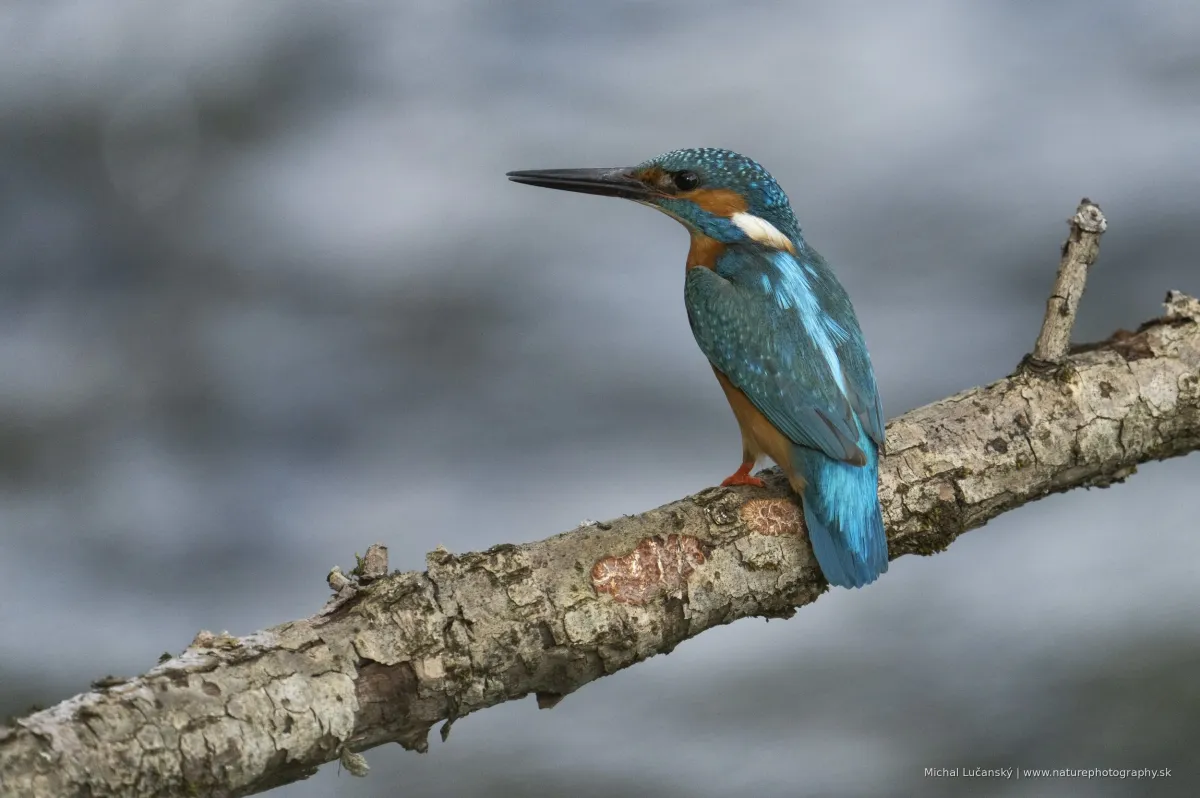
This “flying jewel” is the main reason I took up nature photography in earnest. 2013 is already my third season of trying to track down nesting burrows. Once you find a nest, your chances of taking a perfect photograph go up enormously. The kingfisher is a rather shy little bird, so there is no getting away from proper camouflage. Many times it has spotted my hide without any trouble, even when I thought I was perfectly concealed.
2011 – by then nature photography had well and truly got its hooks into me. I was shooting with a Sony A200 and a Sony SAL 75-300 lens. I had already been watching the kingfisher’s movements along the Váh, so a friend and I decided to set out on our first hunt. Our “sure-fire” spot was a fallen tree. Looking back, it was probably the worst location we could have chosen. Our “azure model” had an almost endless choice of places to land, and she made full use of it. On top of that, our camouflage proved far from perfect, so the whole session yielded just one single photo. Its technical quality is very poor, but it was the first, so it has a place of honour in my archive.
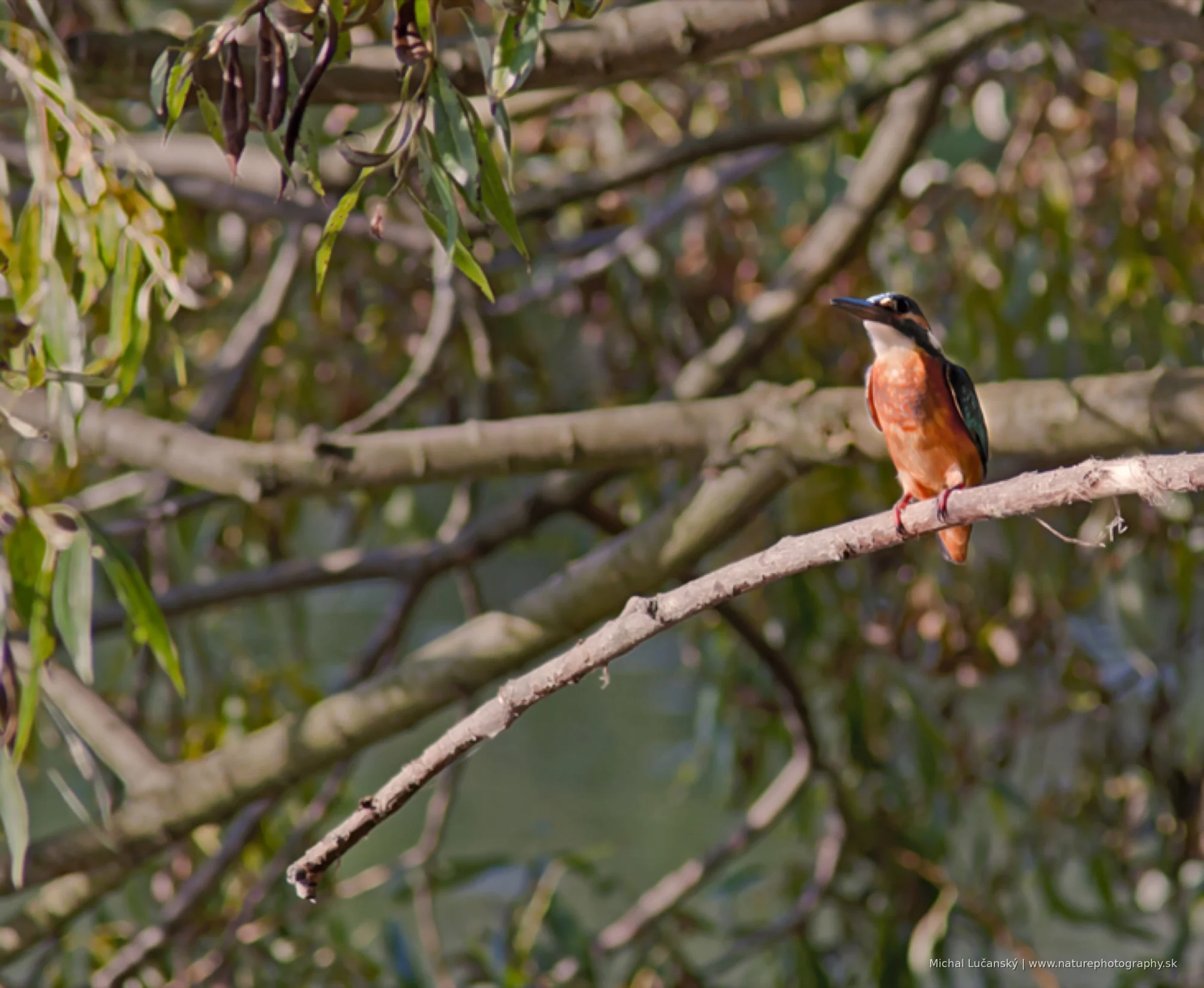
2012 began with a change of kit to a Sony A700 and a Sigma 150-500. Once again the kingfisher’s breeding season started, so we set off again in search of the longed-for nest. The plan, of course, was simple, but carrying it out was really hard work. The sightings piled up but still didn’t lead us to the nest, so we switched to a new tactic. We would follow the kingfisher to the point where we lost sight of it, move to that spot and wait for it to show up again. Little by little we worked our way to a place where the kingfisher flew into a small wood, and that was where phase two began – combing the wood to find a nest entrance about 5 cm across. Anyone interested in kingfishers knows that they nest in vertical banks where they can dig out a burrow. This pair, however, had chosen a pretty extreme home. A small gully had formed in the wood, and a fallen tree had made it bigger. It was right there, in the hollow left by the uprooted tree, that we first saw that little blue “something” fly into the nest. From that moment our efforts made a breakthrough and we could finally start thinking about photography. As for camouflage, we already had some practical experience behind us. We simply built a frame by the nest and covered it with camouflage netting. Then came the long hours in our base. But the first successes were not long in coming.
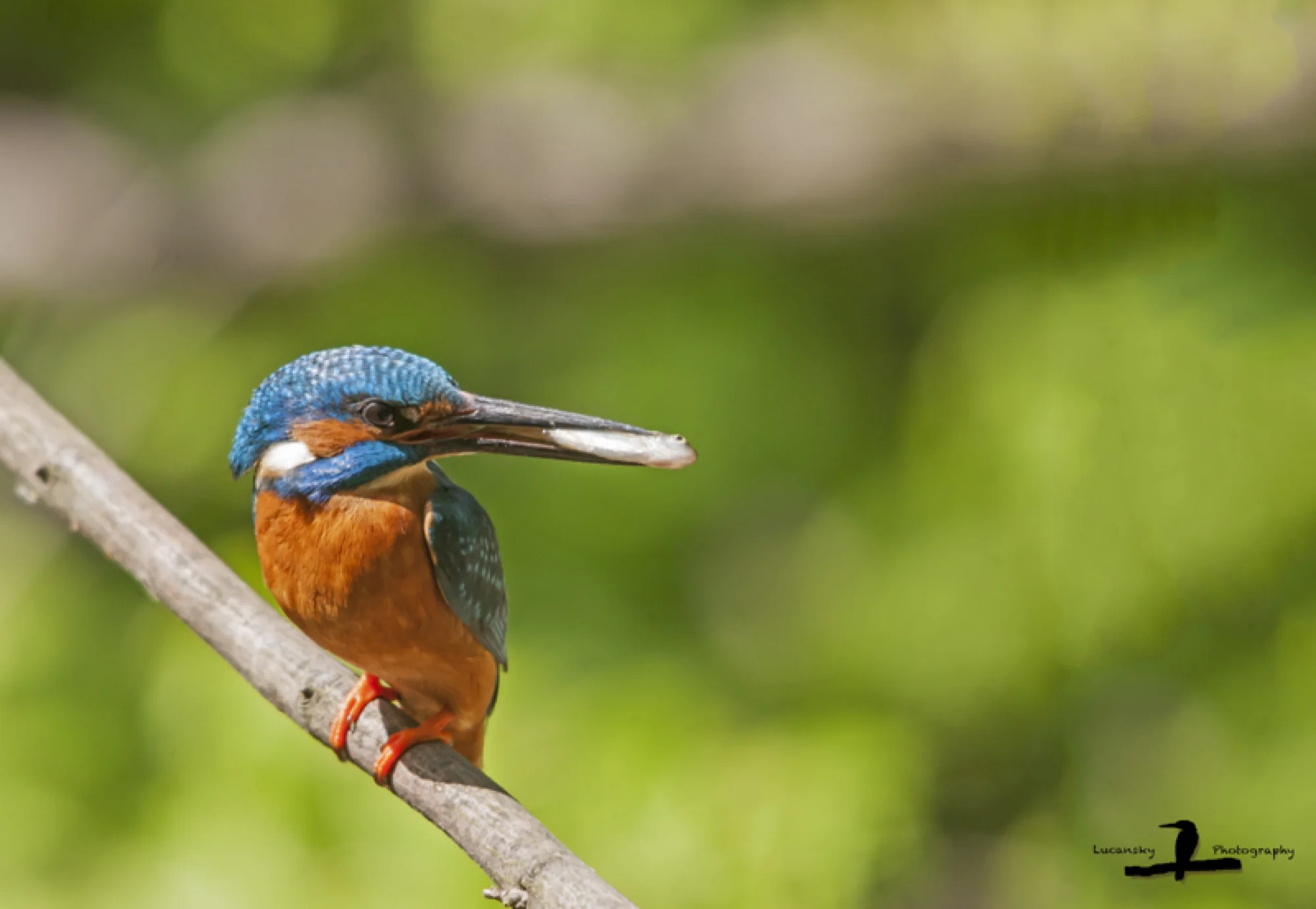
Once the young hatched, the perfect feeding period arrived, when you have the best chance of getting a shot. It was no different for us. We gradually got into a routine and the photos kept adding up. But after a while the pictures started to repeat themselves, so another search began – this time for the fishing ground. We used our tried-and-tested method of observation again and managed to pinpoint fairly precisely where the female flew to catch food for herself and her offspring. And once again it was a place not exactly suited to the kind of photography we had planned.
So it was back to camouflage and waiting. The kingfisher let us photograph it nicely, but our lack of experience with this kind of action photography showed. After a few days without success, we were surprised by diggers that started preparing the site for a motorway construction. That meant we had to start searching all over again.
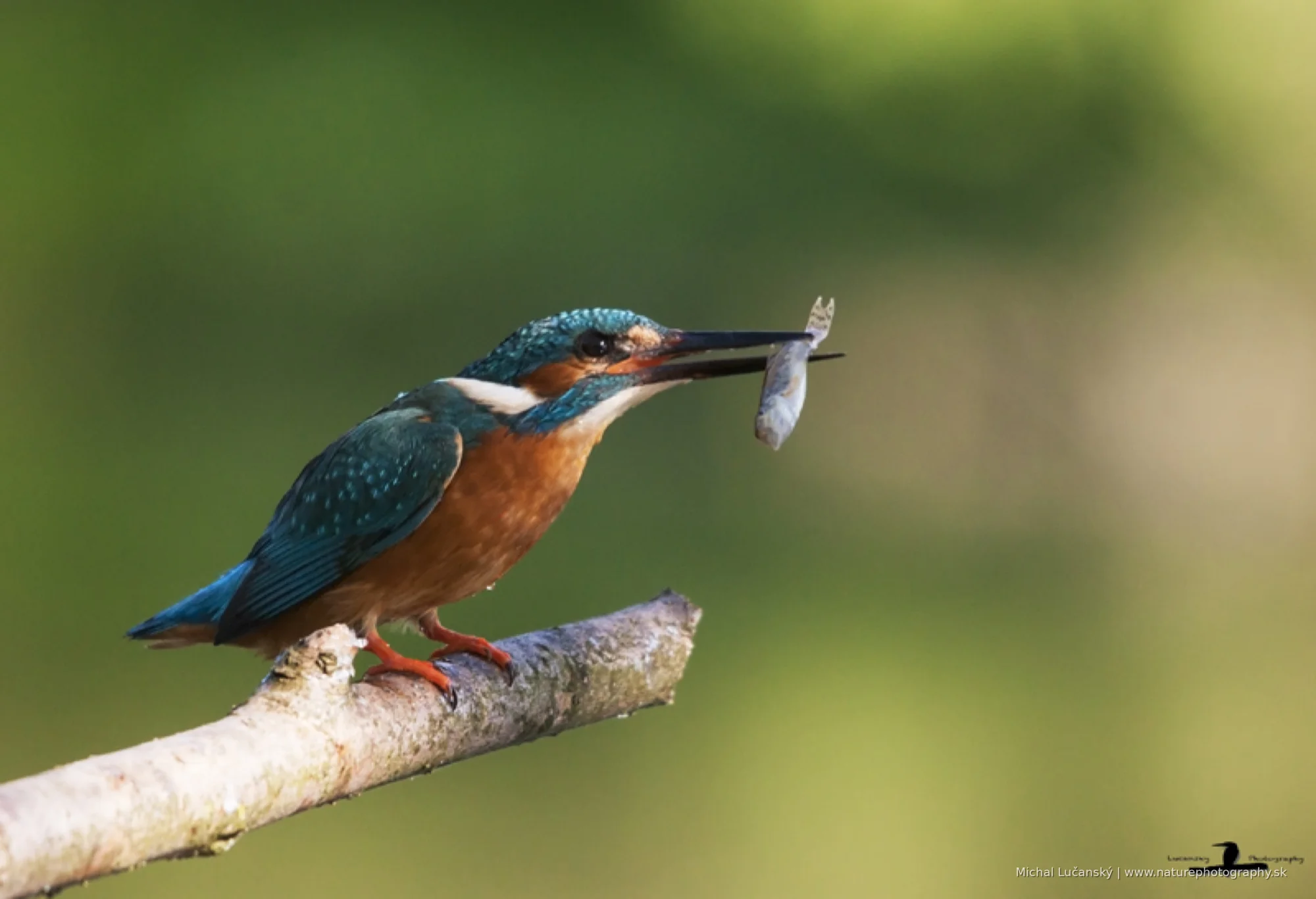
We moved to another location where we had also seen “jewels” flitting about. But we never managed to find a proper fishing ground there. In the autumn I switched to Canon. My first Canon body was a 7D, paired with a Canon 400 f/5.6 L USM. The young birds were gradually showing themselves and trying to gain hunting experience. That is how we picked out another spot where we had seen a kingfisher fishing a few times. Getting to it was once again something of an acrobatic feat, but that didn’t put us off. We set up a perfect fishing perch and the waiting began again. Yet even this time the longed-for shot didn’t happen. Although I didn’t get a fishing shot, during one session I did get perfect portraits of a young kingfisher. I had bought a Canon 1.4x Mk II teleconverter and wanted to test it on my Canon 400 mm f/5.6 L USM at the time. Yes, you read that right. I wasn’t expecting any miracles, but the reality was completely different. As the weather once again didn’t grant us decent light, I also brought a Better Beamer and a flash to test. The kingfisher sat on the branch exactly as I wanted. So I started shooting. I didn’t know how it would react to the flash. But its reaction was brilliant – it didn’t mind at all. That was the last session of 2012. Over the winter we walked along the Váh, but we only caught sight of the kingfisher occasionally.
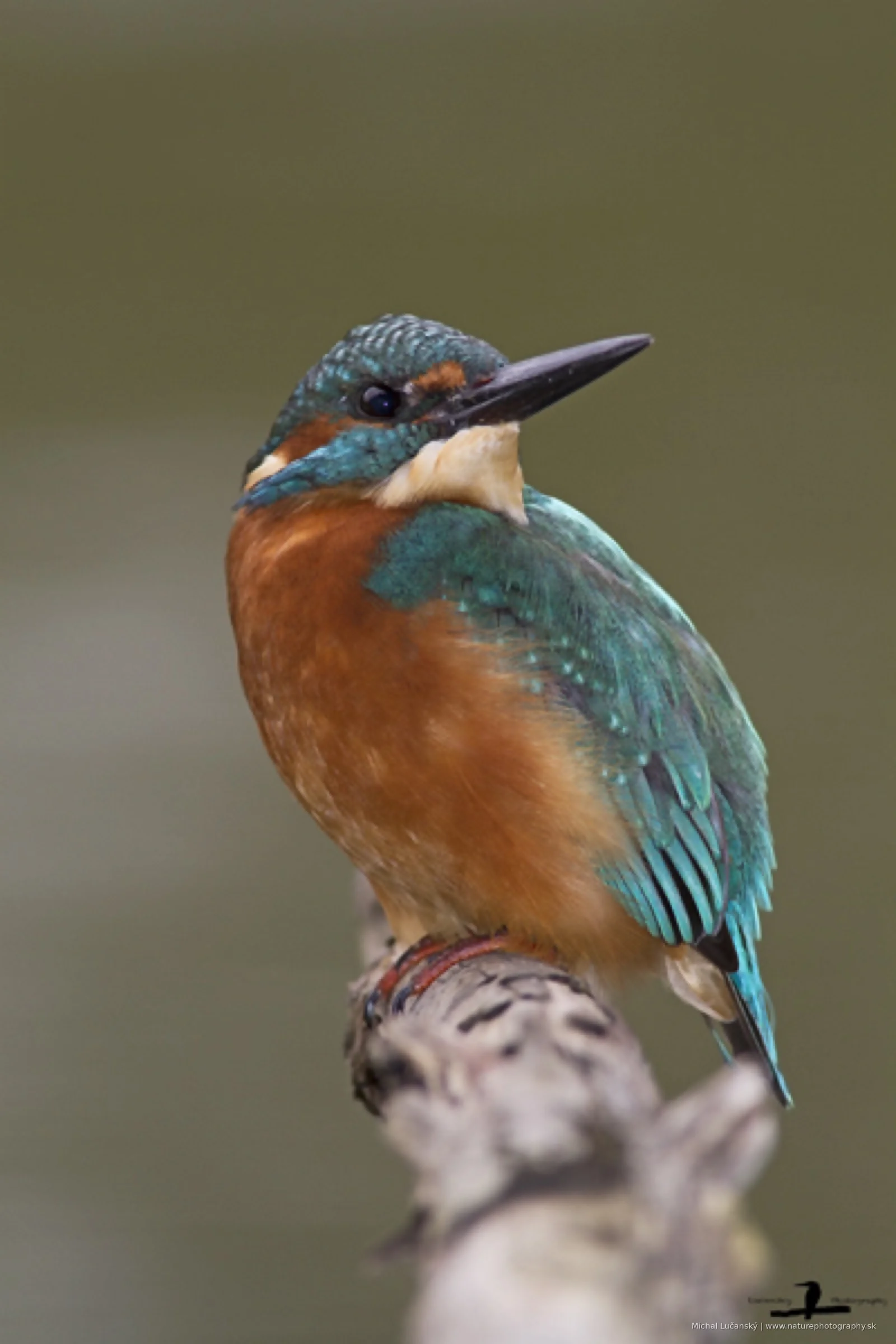
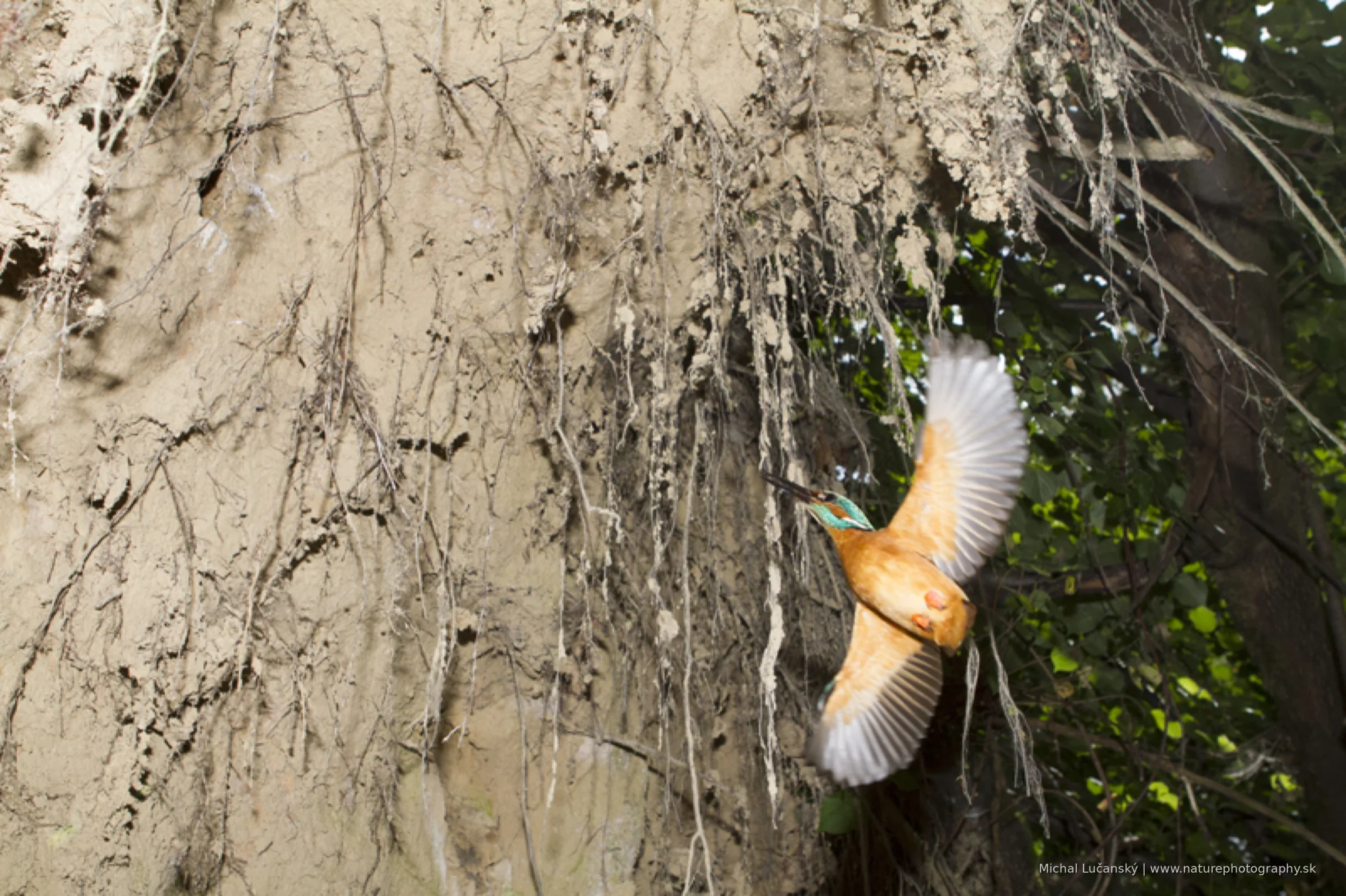
2013 brought new additions to the camera bag once again. A 5D Mk III joined the 7D, and the 400 was replaced by a 500 f/4 L IS USM. My very first outing with the new glass led to the kingfisher nest. We tried again to find a new nest, one better suited to photography. After a few promising observations that looked like a new burrow being dug came disappointment. And so we found ourselves back at the old nest. The kingfisher didn’t let us down and had already dug a new burrow. This time I swapped the camouflage netting for a hide tent. Pitching it on a steep slope, though, was a real struggle. Luckily for me I managed it, and before long the male kingfisher appeared in all his glory. He strutted about on the branch I had prepared below the nest and posed every few minutes. This was the period when he was still courting the female. Unfortunately, she was being fed somewhere completely different from where I had expected. Even so, I got some interesting shots of the kingfisher preening and regurgitating the remains of a fish. Here too the portraits gradually began to repeat themselves, so I started working out how to get an action shot. As I didn’t have a fishing spot, I began trying to photograph the kingfisher flying into the nest. Once again came endless experimenting with equipment and settings. After some early failures I arrived at the combination of a Canon 5D Mk III and a Canon 24-70 f/2.8 L. Without flash, however, this set-up couldn’t freeze the little “torpedo” on its way into the nest, so I added a Canon Speedlite 580 EX II flash. Gradually I worked out settings that did the job. And that is how my first “action” shot came about. Because of work, though, I missed the first period of fish being carried to the nest. When I got back to Slovakia, I found the kingfishers sitting on a second clutch. When I worked out when the fish-carrying would start again, I wasn’t exactly thrilled. Once again it fell at a time when I would be away from Slovakia. As soon as I was back I went straight to the nest, set up my tried-and-tested rig and just waited for the comings and goings every few minutes. Unfortunately, something had gone wrong in my calculations, and when I saw a fledgling near the nest I had to admit that this season hadn’t brought the longed-for shot either. That doesn’t change my determination to carry on with the work I have started, though. So I’m already looking forward to the new season.